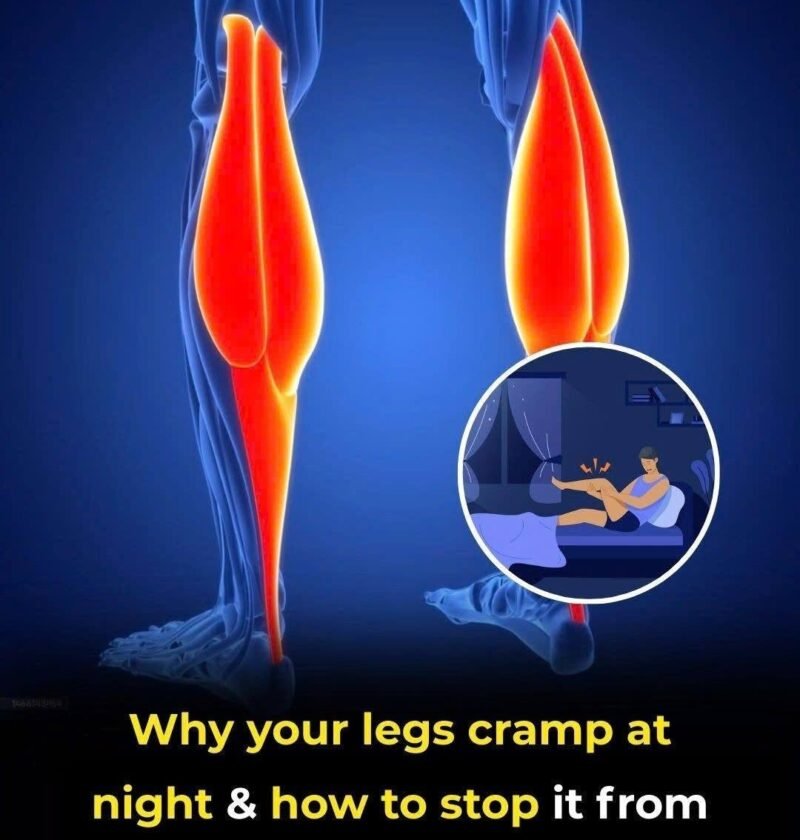
Why Do Leg Cramps Happen While Sleeping?
Nighttime leg cramps are sudden, involuntary contractions—usually in the calves, feet, or thighs—that can wake you with intense pain. They’re common and often aren’t caused by a single problem.
Common reasons
- Muscle fatigue or overuse — A hard workout, prolonged walking, or standing can increase the likelihood of cramps later.
- Being inactive — Long periods of sitting or reduced physical activity may contribute to muscle and nerve changes.
- Certain sleeping positions — Keeping the foot pointed downward for a long time may shorten the calf muscle and make cramping more likely.
- Dehydration — Losing fluids through sweating or simply not drinking enough can contribute in some people.
- Electrolyte disturbances — Abnormal levels of potassium, calcium, or magnesium can cause muscle problems, although ordinary nighttime cramps aren’t necessarily due to a magnesium deficiency.
- Age-related changes — Night cramps become more common as people get older.
- Pregnancy — Leg cramps are particularly common during pregnancy.
- Certain medications — Some medicines, including certain diuretics, can contribute to cramps or electrolyte changes.
- Underlying health conditions — Nerve disorders, circulation problems, kidney disease, thyroid disorders, and other conditions can sometimes play a role.
What to do when a cramp strikes
Gently stretch and massage the affected muscle. For a calf cramp, straighten your leg and gently pull your toes toward your face. Standing and walking carefully for a short time may also help.
To reduce recurring cramps, stay adequately hydrated, remain physically active, and gently stretch your calves before bed.
If cramps are frequent, severe, newly appearing, or accompanied by swelling, weakness, numbness, or persistent pain, talk with a healthcare professional. Don’t start high-dose electrolyte or magnesium supplements without determining whether you actually need them.