How Aging Skin Changes After 65
-
Thinner Epidermis: After age 60, the outer layer of skin thins and loses elasticity, making it far more fragile and prone to micro-tears.
-
Reduced Sebum Production: Sebaceous (oil) glands produce significantly less natural oil, stripping away the skin’s protective lipid barrier.
-
Slower Cell Turnover: Skin takes longer to repair itself after minor irritation, dryness, or friction from scrubbing.
Why Daily Showers Can Backfire
-
Severe Dryness and Itching (Asteatotic Eczema): Hot water and harsh soaps wash away the few remaining natural oils, leaving skin tight, flaky, and intensely itchy—especially on the lower legs and back.
-
Increased Risk of Skin Infections: Cracked, overly dry skin creates microscopic entry points for bacteria, raising the risk of cellulitis and fungal infections.
-
Disruption of the Skin Microbiome: Frequent scrubbing strips away beneficial bacteria that naturally crowd out harmful pathogens.
-
Dizziness and Fall Risk: Hot steam dilates blood vessels and can cause a sudden drop in blood pressure, increasing the risk of lightheadedness or slipping on wet surfaces.
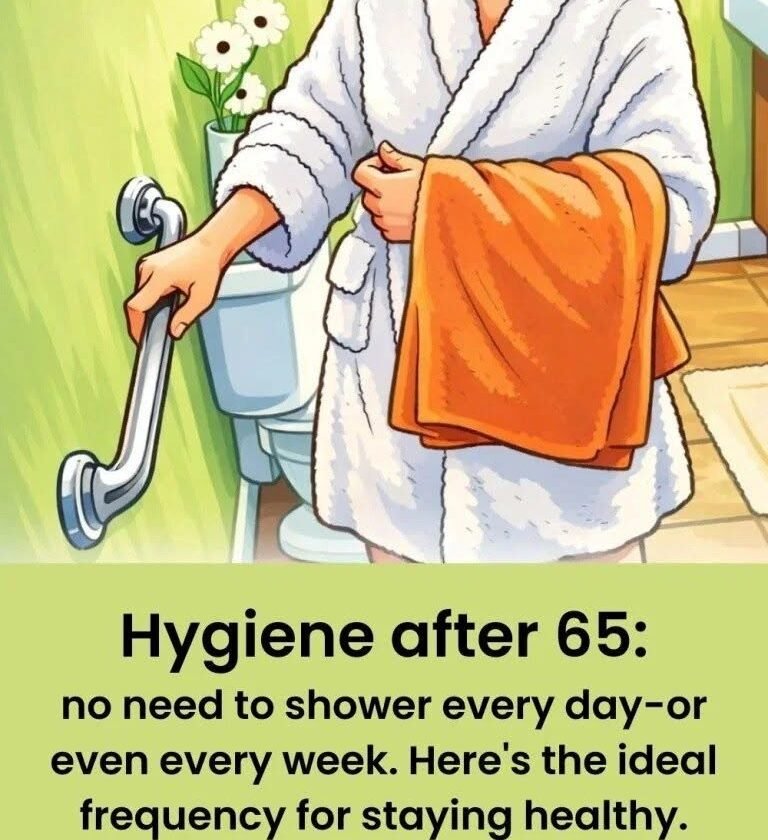
Dermatologist-Recommended Routine for Adults 65+
| Habit | What to Do Instead |
| Frequency | Shower every other day or 2–3 times weekly; do a quick daily washcloth rinse of key areas (underarms, groin, feet, face). |
| Water Temperature | Use lukewarm water rather than hot; keep showers under 5 to 10 minutes. |
| Cleanser | Skip deodorant bar soaps; use gentle, fragrance-free, non-soap cleansers only where needed. |
| Drying & Moisturizing | Pat skin gently with a towel (leave it slightly damp) and apply a thick cream or ointment (like petrolatum or ceramides) within 3 minutes to lock in moisture. |