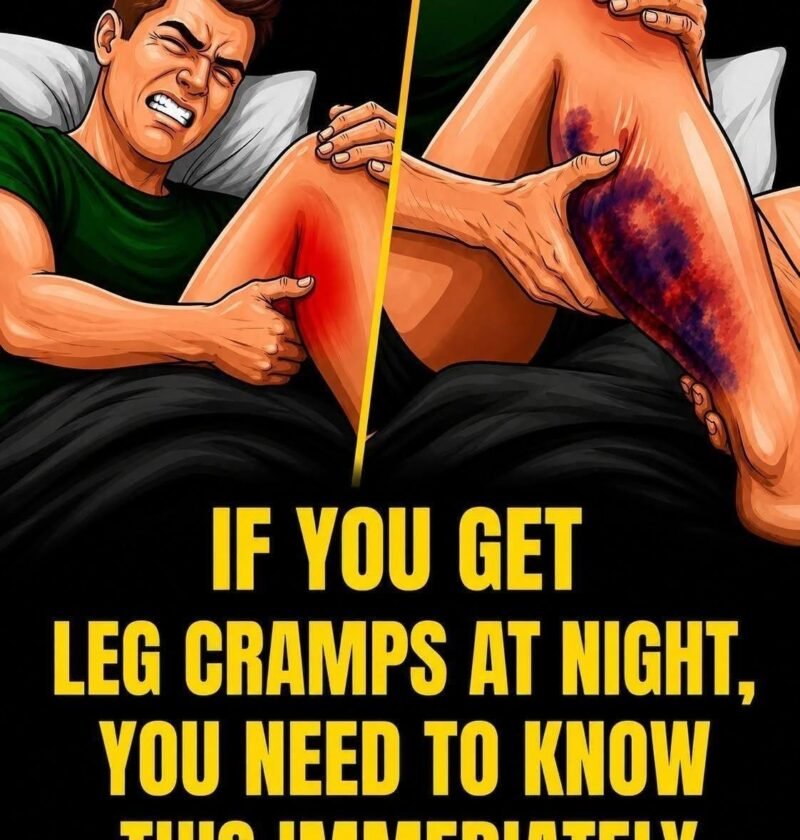
If You Get Leg Cramps at Night, You Need to Know This Immediately
Waking up with a calf or foot suddenly tightening can be painful and frightening. The good news is that most nighttime leg cramps are temporary and aren’t dangerous. But frequent or severe cramps deserve attention because they can sometimes be related to medications or an underlying health problem.
What causes nighttime leg cramps?
There isn’t one universal cause. Possible contributors include:
- Muscle fatigue or overuse, especially after unusual exercise or prolonged standing.
- Long periods of inactivity or sitting.
- Pregnancy and increasing age, both of which are associated with more frequent cramps.
- Certain medications, including some diuretics and medicines used to lower cholesterol.
- Nerve problems or disorders affecting the muscles.
- Circulation problems in some people.
- Dehydration or electrolyte abnormalities can contribute in particular situations.
One common internet claim is that nighttime cramps automatically mean you’re low in magnesium. That’s not necessarily true. Magnesium supplements don’t reliably prevent ordinary nighttime leg cramps in most adults unless a deficiency or another specific reason exists.
What to do when a cramp strikes
Don’t panic. Try to gently stretch the affected muscle.
For a calf cramp, straighten your leg and gently pull your toes toward your face. You can also massage the cramped muscle and, if you’re steady enough, carefully stand and walk for a short time.
Avoid aggressively forcing the muscle into a painful stretch.
How can you reduce recurring cramps?
Regular physical activity and gentle calf and hamstring stretching may help some people. Staying adequately hydrated is also sensible, particularly if you’ve been exercising or losing fluids through sweating.
If cramps began after starting or changing a medication, talk to your doctor or pharmacist rather than stopping the medicine yourself.
When should you get checked?
Make an appointment if cramps are:
- Happening frequently
- Becoming increasingly painful
- Regularly disturbing your sleep
- Associated with muscle weakness or numbness
- Beginning after a medication change
- Accompanied by other persistent symptoms
And don’t assume that severe leg symptoms are “just cramps.”
Sudden swelling, warmth, redness, and significant pain in one leg can have a different cause and should be medically assessed promptly. If you develop sudden chest pain or difficulty breathing along with leg symptoms, seek emergency medical care.
The important takeaway
A nighttime leg cramp usually doesn’t mean your body is desperately missing one particular vitamin or mineral. There are many possible causes, and treatment works best when the underlying reason is identified.
If your cramps are occasional, gentle stretching and maintaining normal hydration may be enough. If they’re persistent or worsening, it’s worth getting them evaluated rather than relying on a “miracle” supplement.