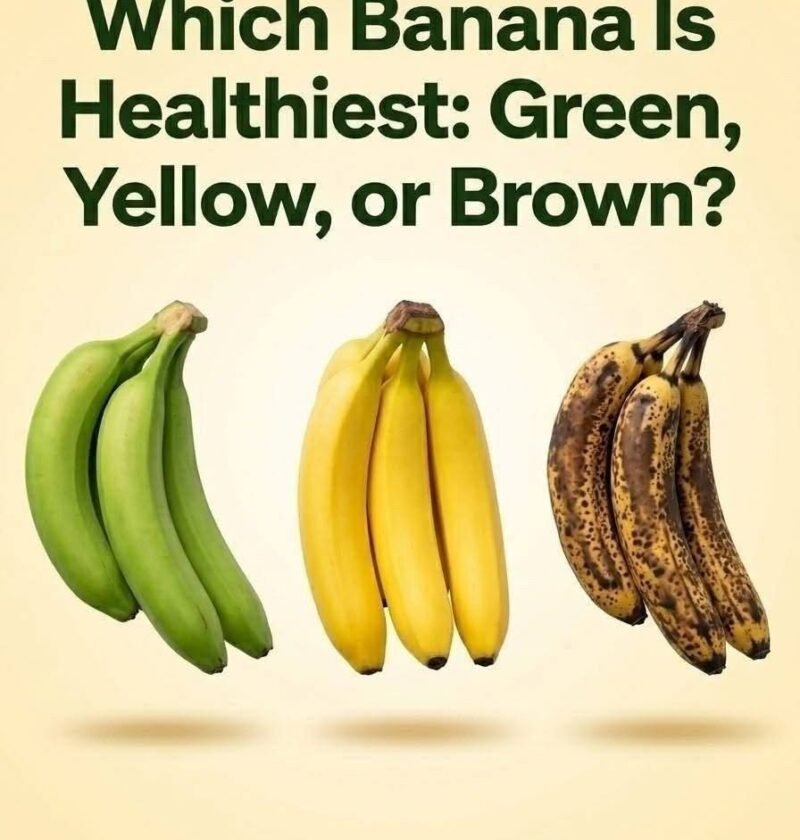
🍌 Which Banana Is Actually the Healthiest?
There isn’t one banana that’s universally “healthiest.” The best choice depends on what you’re looking for, because ripeness changes the banana’s carbohydrate, sugar, and resistant-starch content.
- 🟢 Green/unripe banana: Higher in resistant starch, which behaves somewhat like fiber and can support gut health. It tends to have a lower immediate impact on blood glucose than a very ripe banana.
- 🟡 Yellow banana: A good all-around choice. It’s naturally sweet and provides potassium, vitamin B6, vitamin C, and fiber.
- 🟤 Very ripe/spotted banana: Softer and sweeter because starches have been converted into simpler sugars. It isn’t “unhealthy,” but it generally has less resistant starch than a green banana.
🩺 What about diabetes?
People with diabetes don’t necessarily need to avoid ripe bananas. Portion size and the overall meal matter. Eating a banana alongside a source of protein or healthy fat—such as plain yogurt or nuts—can help make the meal more filling and may slow digestion.
💪 For gut health
A less-ripe banana may be particularly interesting because of its resistant starch. As the banana ripens, much of that starch is converted into sugars.
Bottom line
For general nutrition: yellow bananas are an excellent choice.
For more resistant starch: choose greener bananas.
For sweetness and easy digestion: choose a ripe banana.
The differences aren’t large enough to make one stage “bad” and another “good”—choose the ripeness you enjoy and fit it into your overall diet.