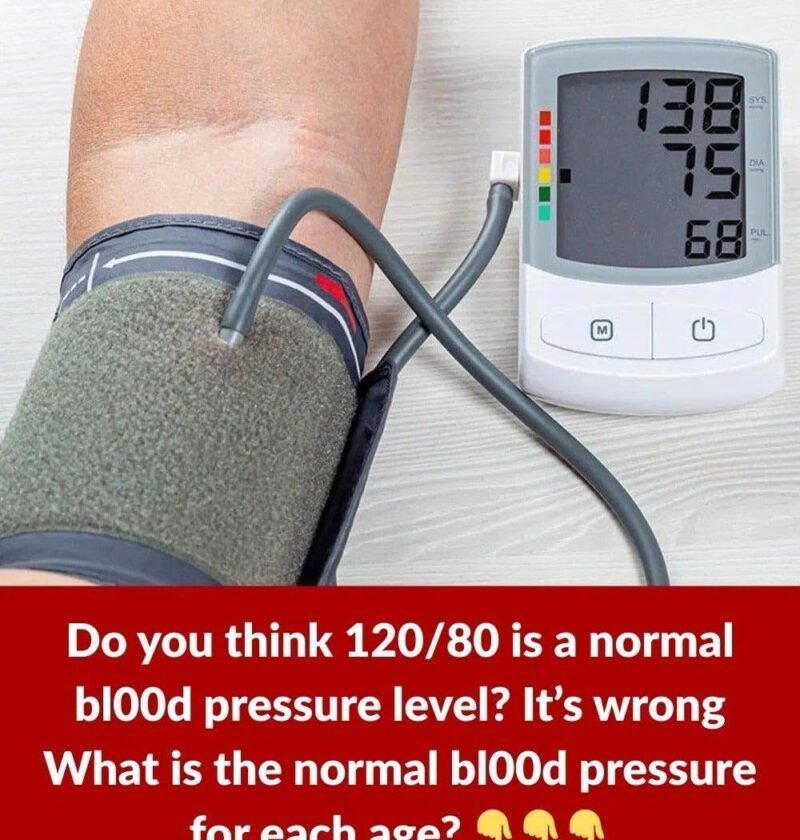
For adults, medical guidelines (such as those from the American Heart Association and the American College of Cardiology) state that the ideal normal blood pressure for all adults is less than 120/80 mmHg, regardless of age.
While it is true that average blood pressure naturally tends to drift upward as people get older due to stiffening arteries, a higher reading isn’t automatically considered “healthy” just because of age.
Adult Blood Pressure Categories
| Category | Systolic (Top Number) | Diastolic (Bottom Number) | |
| Normal | Less than 120 | and | Less than 80 |
| Elevated | 120–129 | and | Less than 80 |
| Stage 1 Hypertension | 130–139 | or | 80–89 |
| Stage 2 Hypertension | 140 or higher | or | 90 or higher |
| Hypertensive Crisis (Seek immediate care) | Higher than 180 | and/or | Higher than 120 |
Average Readings vs. Clinical Targets by Age Group
While the clinical target remains under 120/80 mmHg, statistics show how averages shift across different life stages:
-
Young Adults (18–39 years): Average readings hover around 110–120 / 70–74 mmHg. Maintaining optimal pressure here is crucial to prevent long-term cardiovascular wear and tear.
-
Middle Age (40–59 years): Averages naturally rise to around 122–124 / 74–77 mmHg. Readings consistently hitting 130/80 mmHg or higher in this bracket are typically flagged as Stage 1 hypertension.
-
Older Adults (60+ years): Averages can trend higher (often around 133–139 / 68–74 mmHg). While doctors sometimes individualize treatment goals for frail elderly patients to prevent dizziness or falls from over-medication, a reading below 130/80 mmHg remains the gold standard for reducing heart attack and stroke risk wherever safely possible.
Children and Adolescents
Unlike adults, normal blood pressure for children (ages 1 to 17) does change by age, height, and gender. Pediatric charts use percentiles rather than a single flat number.
-
For example, normal systolic pressure for a young child might range between 90 and 110 mmHg, while older adolescents approach adult ranges (typically under 120/80 mmHg). Pediatricians evaluate these using specialized growth-chart percentiles.
Are you looking into blood pressure numbers for a specific age group, or did you recently get a reading you’d like context on?