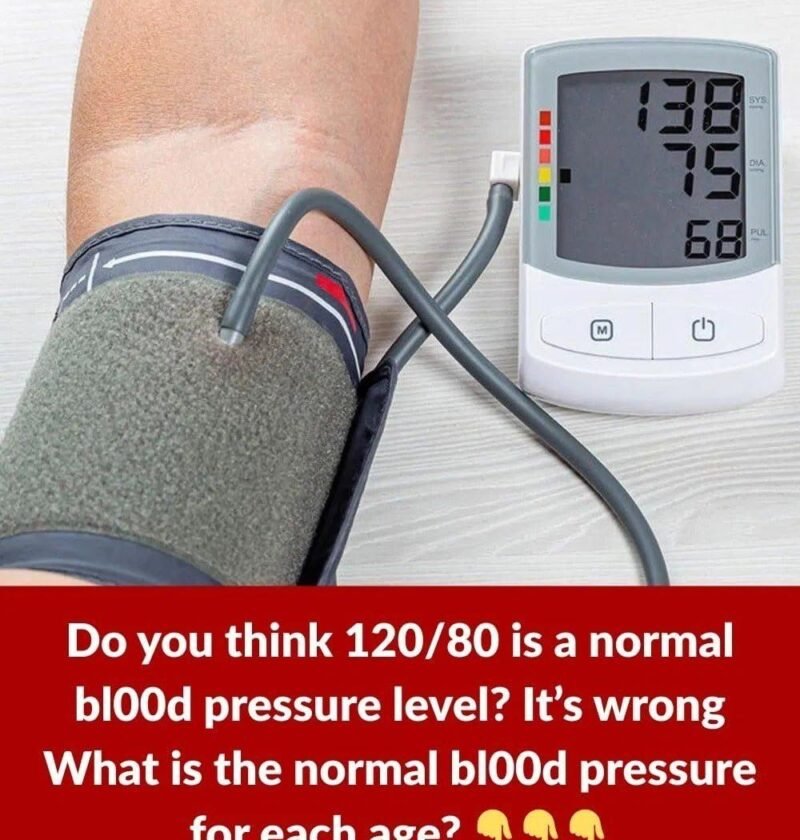
Blood pressure doesn’t have one exact “normal” value for each age. For adults, the usual healthy target is generally below 120/80 mmHg, and blood-pressure categories are based more on the actual reading than on age.
Typical adult categories
| Blood pressure | Systolic (top) | Diastolic (bottom) |
|---|---|---|
| Normal | <120 | <80 |
| Elevated | 120–129 | <80 |
| High — Stage 1 | 130–139 | 80–89 |
| High — Stage 2 | ≥140 | ≥90 |
| Very high | ≥180 | and/or ≥120 |
These are adult categories; children and teenagers have different reference ranges based on age, sex, and height.
A single high reading doesn’t necessarily mean you have hypertension. It’s generally better to take 2 readings, about 1 minute apart, while rested, and look at readings over several days.
If your blood pressure is 180/120 or higher, repeat it after a few minutes. If it remains that high—especially with chest pain, difficulty breathing, severe headache, weakness/numbness, confusion, or vision changes—seek emergency medical care.
If you give me the person’s age and blood-pressure reading (for example, 65 years old, 145/88), I can explain what that reading means.