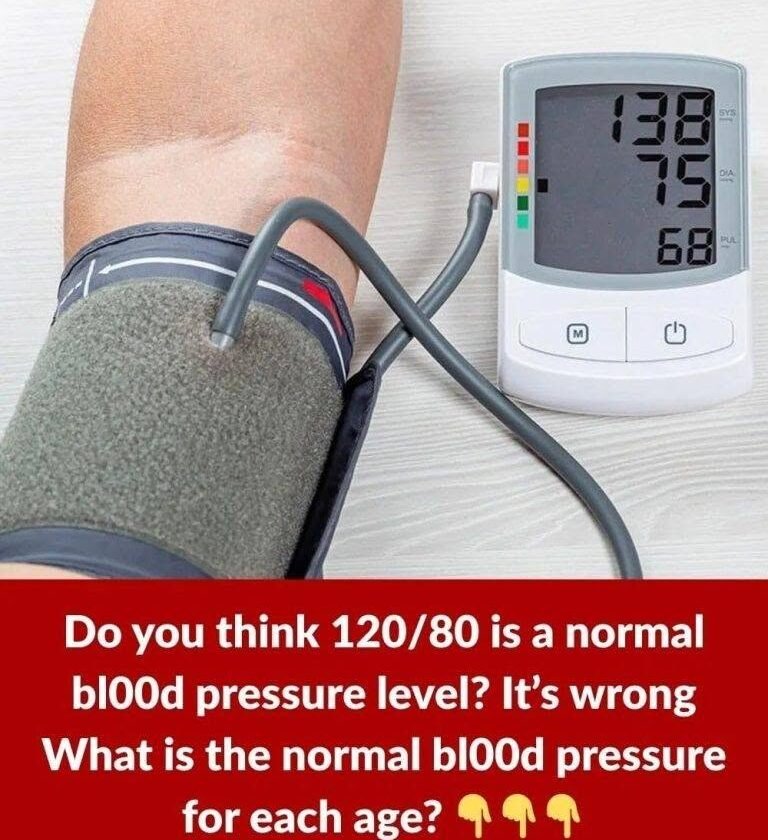
When looking at blood pressure, medical guidelines draw a clear distinction between what is clinically normal and what is statistically average for a given age.
According to major health organizations like the American Heart Association (AHA), the ideal target for all adults (ages 18 and older) is less than 120/80 mmHg. While blood pressure naturally tends to drift upward as people age due to normal arterial stiffening, a higher reading that is “common for your age” is not necessarily considered healthy.
📊 Adult Blood Pressure Categories (Ages 18+)
For adults, readings are classified into the following categories (based on whichever number is higher):
| Category | Systolic (Top Number) | Diastolic (Bottom Number) | |
| Normal | Less than 120 | and | Less than 80 |
| Elevated | 120–129 | and | Less than 80 |
| Hypertension Stage 1 | 130–139 | or | 80–89 |
| Hypertension Stage 2 | 140 or higher | or | 90 or higher |
| Hypertensive Crisis (Seek immediate care) | Higher than 180 | and/or | Higher than 120 |
📈 Typical Averages by Age Group
While the official healthy target remains below 120/80 mmHg across adulthood, population averages change across different stages of life:
-
Ages 18–39: Averages typically range from 110/68 to 120/78 mmHg. Younger adults generally have the lowest readings of adult life, making early lifestyle habits critical.
-
Ages 40–59: Averages typically range from 120/74 to 132/82 mmHg. This is often the decade where systolic pressure (the top number) begins a steady climb due to gradual changes in blood vessels.
-
Ages 60 and older: Averages typically range from 130/70 to 142/76 mmHg. It is very common for older adults to see a rising top number while the bottom number levels off or drops. However, readings consistently at or above 130/80 mmHg still technically meet the threshold for high blood pressure.
👶 Children and Teens
Unlike adults, normal blood pressure for children (ages 1 to 17) is not a single fixed number. Instead, pediatric ranges are determined using a child’s age, height, and gender, as taller or older children naturally have higher baselines. Pediatricians use specific percentiles; generally, a reading below the 90th percentile for a child’s specific demographic is considered normal.