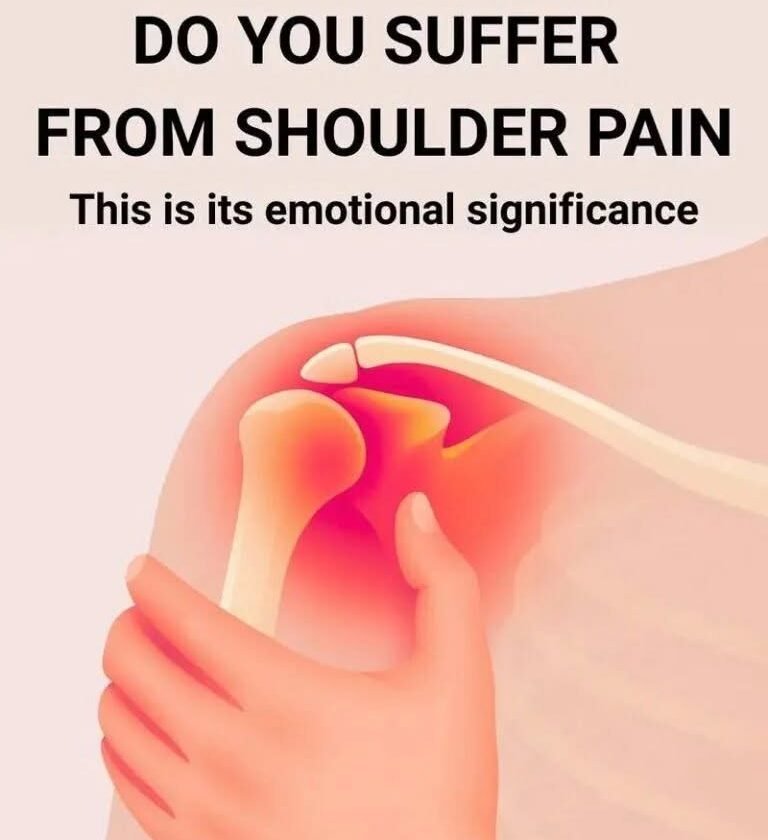
In the realms of mind-body medicine, somatic psychology, and holistic philosophies (such as Louise Hay’s work or traditional eastern frameworks), the shoulders are viewed as the physical anchor for responsibility, burden, and emotional weight.
When a person experiences unexplained or recurring tension, stiffness, or pain in the shoulders, it is often interpreted symbolically as carrying too much—whether that means excessive obligations, emotional baggage, or the weight of the world on one’s back.
Key Symbolic Meanings of Shoulder Pain
-
Carrying the Weight of Responsibility: The shoulders literally support the arms, which we use to reach out, build, and hold onto things. Metaphorically, they represent how much we feel we have to “handle” or endure. Chronic shoulder tension often correlates with over-functioning, perfectionism, or feeling solely responsible for the well-being of others, a family, or a job.
-
Burden and Oppression: The phrase “carrying the weight of the world on your shoulders” is more than a figure of speech. Unresolved stress, grief, or financial and emotional strain frequently manifests physically as tight traps and shoulder girdles as the body braces against perceived threats or exhaustion.
-
Imposed Obligations (Doing What You “Have” to Do): Shoulder pain is frequently linked to a subconscious sense of obligation—doing things out of duty rather than desire. If you feel forced into a role, career path, or relationship dynamic, the physical rigidity can mirror your internal resistance.
-
Right vs. Left Side Differences (Somatic Nuance):
-
The Right Shoulder is traditionally associated with external matters, professional responsibilities, masculine energy (action, provision, assertiveness), or relationships with authority figures and men.
-
The Left Shoulder is often linked to internal, emotional, or nurturing realms, feminine energy (receptivity, intuition, vulnerability), family dynamics, and personal relationships.
-
The Mind-Body Connection
From a physiological perspective, this “emotional meaning” is rooted in the nervous system. When you experience chronic mental stress, emotional overwhelm, or a sense of helplessness, your body activates its fight-or-flight response. The trapezius and shoulder muscles automatically contract to protect the neck and vital organs, leading to chronic tightness, reduced blood flow, and pain.
While exploring the emotional and psychological underpinnings can offer powerful self-awareness, it is always wise to rule out physical causes—such as poor posture, ergonomics at a desk, rotator cuff strains, or nerve compression—with a healthcare professional or physical therapist.