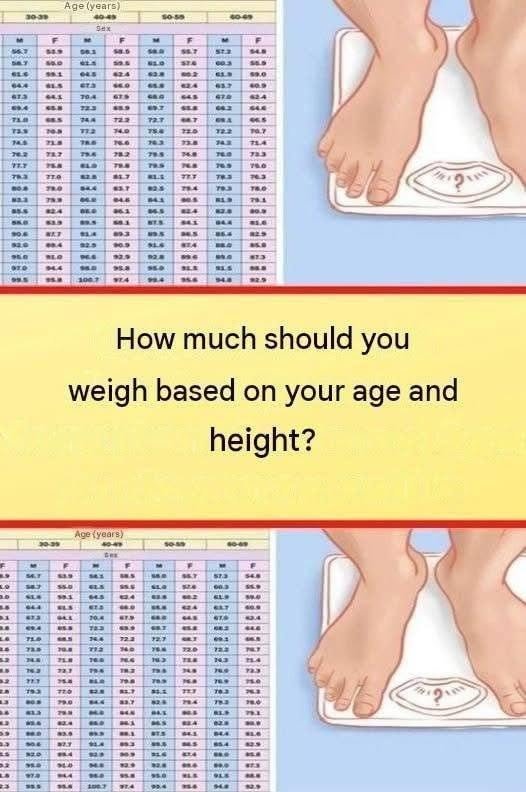
The idea of an “ideal weight” has shifted dramatically in modern medicine. Instead of a single, rigid number on a scale, doctors and health experts now view an ideal weight as a range where your body functions at its best, minimizing your long-term risk for chronic diseases like heart disease, diabetes, and joint issues.
Here is a complete guide to understanding what a healthy body weight actually means and how it is evaluated.
Why There Is No Single “Ideal” Number
You cannot look at a chart and find one exact weight that fits everyone of your height. Two people with the exact same height and weight can have completely different body compositions and health profiles. A healthy weight depends on several personal factors:
-
Body Composition: The ratio of muscle mass to body fat. Muscle is much denser than fat, meaning an active, muscular person will naturally weigh more than someone of the same height with lower muscle mass.
-
Bone Structure and Frame Size: People with larger skeletal frames naturally carry more weight healthily than those with smaller frames.
-
Genetics and Age: Fat distribution and metabolism naturally shift as we age, and our genetic makeup influences where and how we store body fat.
Common Tools Used to Evaluate Healthy Weight
While no single tool is flawless, medical professionals use a combination of metrics to gauge whether a person is at a healthy weight:
1. Body Mass Index (BMI)
-
What it is: A mathematical formula that uses your height and weight to estimate body fat (Weight in kg / [Height in meters]²).
-
The Categories: Generally, a BMI between 18.5 and 24.9 is considered normal or healthy, 25 to 29.9 is considered overweight, and 30 or higher falls into the obese range.
-
The Limitation: BMI is a helpful population-level screening tool, but it has blind spots. It cannot distinguish between muscle and fat, meaning a muscular athlete might be classified as “overweight” despite having very low body fat. Conversely, it can miss high body fat in older adults who have lost muscle mass.
2. Waist Circumference
-
What it is: Measuring the distance around your natural waistline.
-
Why it matters: Excess weight stored around the abdomen (visceral fat) wraps around vital organs and poses a much higher health risk than fat stored on the hips and thighs.
-
General Guidelines: Health risks generally increase if waist circumference is greater than 35 inches (88 cm) for women and 40 inches (102 cm) for men.
3. Body Fat Percentage
-
What it is: The proportion of your total weight that comes from fat tissue versus lean tissue (muscles, bones, organs, water).
-
Why it’s useful: It provides a much clearer picture of true fitness and metabolic health than weight or BMI alone.
-
General Ranges: Healthy body fat ranges vary by age and sex, but generally fall between 21%–33% for women and 8%–19% for men (though these ranges shift slightly higher as we age).
What Does an “Ideal Weight” Feel Like?
Beyond charts and formulas, a truly healthy weight is one that supports your daily life and well-being. Indicators that you are at a healthy weight for you include:
-
Energy and Stamina: You have enough energy to get through your day without chronic exhaustion.
-
Mobility and Comfort: You can move, bend, and exercise without joint pain or severe shortness of breath.
-
Metabolic Health: Your blood pressure, blood sugar (HbA1c), and cholesterol levels are within healthy ranges.
-
Sustainability: The weight is maintained through a lifestyle you can comfortably sustain—not through extreme restriction or starvation.
The Bottom Line
An ideal weight isn’t about fitting a societal aesthetic standard; it’s about longevity, mobility, and metabolic health. If you are looking to find your personal healthy weight range, the best approach is to consult with a doctor or a registered dietitian who can look at your overall body composition, blood work, and lifestyle rather than relying on the scale alone.