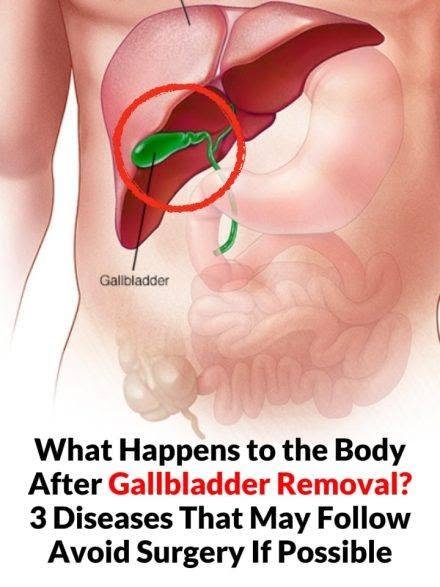
What Happens to the Body After Gallbladder Removal? 🩺
The headline “3 diseases that may follow—avoid surgery if possible” is misleading. Gallbladder removal, or cholecystectomy, is a common procedure and is generally safe. Most people can live normally without a gallbladder. (Mayo Clinic)
What changes after surgery?
The gallbladder stores bile made by the liver. After removal, bile flows continuously from the liver into the intestine rather than being stored in the gallbladder. Most people continue to digest food normally. (NIDDK)
Some people experience:
- Loose stools or diarrhea — often temporary, although persistent diarrhea can occur in a minority of patients.
- Bloating or indigestion
- Abdominal discomfort or nausea — sometimes called post-cholecystectomy syndrome. These symptoms can have several causes and don’t necessarily mean the surgery caused a new disease. (nhs.uk)
Does everyone need their gallbladder removed?
No. People who have gallstones but no symptoms often don’t need treatment. But symptomatic gallstones or complications such as gallbladder inflammation, bile-duct stones, or gallstone-related pancreatitis may make surgery the recommended treatment. (NIDDK)
Avoiding medically necessary surgery can itself be dangerous because untreated gallstones can lead to infection, bile-duct blockage, gallbladder damage, or pancreatitis. (NIDDK)
🚨 After surgery, seek medical attention for
Severe or worsening abdominal pain, fever or chills, yellow skin/eyes, persistent vomiting, or significant wound redness/swelling or discharge. (nhs.uk)
Bottom line: Gallbladder removal does not routinely cause three new diseases. It can cause digestive changes in some people, but for patients with symptomatic or complicated gallstones, surgery can prevent serious complications and is often the standard treatment.