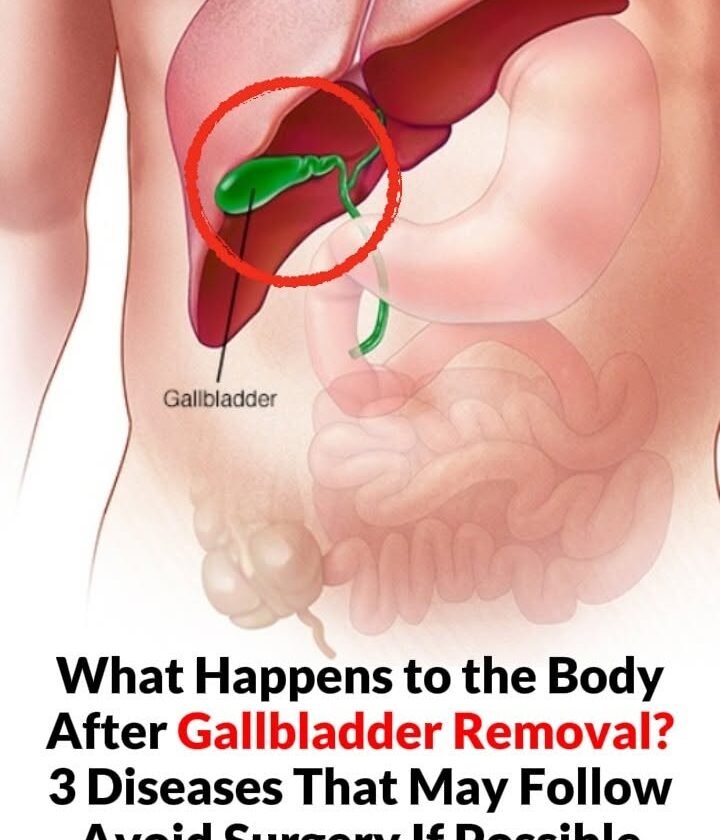
If you’re using this as a health article or social-media headline, there’s an important correction: gallbladder removal does not generally cause “3 diseases,” and telling people to avoid surgery is not medically appropriate as a blanket recommendation. Most people can live normally without a gallbladder. nhs.uk+1
What actually happens after gallbladder removal?
The liver continues producing bile, but instead of being stored in the gallbladder, bile flows more continuously into the intestine. Most people have no major long-term digestive problems. NIDDK+1
Some people can experience:
-
Diarrhea or more frequent stools, sometimes related to bile-acid changes. It is often temporary, but persistent cases can be treated. FHFT+1
-
Abdominal discomfort, indigestion, nausea, or reflux-like symptoms after surgery. These are sometimes grouped under post-cholecystectomy symptoms and may have causes unrelated to the surgery itself. nhs.uk+1
-
Rare surgical complications, including bile leakage, bile-duct injury, infection, bleeding, or blood clots. nhs.uk+1
Should surgery be avoided?
Not necessarily. Whether surgery is appropriate depends on why the gallbladder is being removed. Asymptomatic gallstones often do not require surgery, whereas symptomatic gallstones and complications such as acute cholecystitis, bile-duct stones, or gallstone-related pancreatitis can be indications for cholecystectomy. SAGES+1
Nonsurgical treatments exist for selected patients, but they aren’t suitable for everyone and gallstones can recur. NIDDK
So a more accurate headline would be:
“What Happens to Your Body After Gallbladder Removal? Common Side Effects, Rare Complications, and When Surgery Is Necessary”
If you’re considering surgery yourself, the decision should be based on your diagnosis, symptoms, imaging, and individual surgical risk—not on a general claim that gallbladder removal causes three diseases.