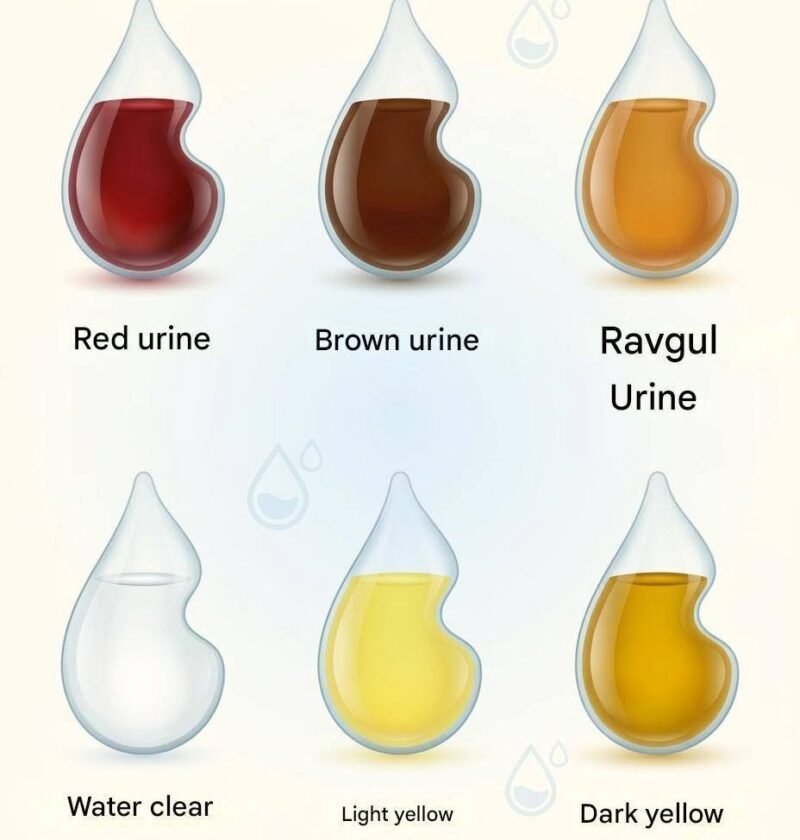
Urine color primarily reflects your hydration status, though foods, medications, and underlying medical conditions can shift it across a wide spectrum. Healthy, well-hydrated urine ranges from pale straw to light yellow, colored by a natural pigment called urochrome (produced when your body breaks down hemoglobin).
Urine Color Guide
When to See a Doctor
Most temporary color shifts resolve within 24–48 hours once you hydrate or finish a food or medication. Seek medical evaluation if you notice:
-
Pink, red, or tea-brown urine not clearly explained by foods like beets—even if it happens once and is completely painless
-
Dark amber or orange urine paired with pale stools or yellowing of the whites of your eyes (jaundice)
-
Persistent foaminess that does not flush away easily, especially with ankle or facial swelling
-
Color changes accompanied by symptoms such as burning during urination, frequent urges, fever, chills, or lower back/flank pain