What Does the Color of Your Urine Say About Your Health?
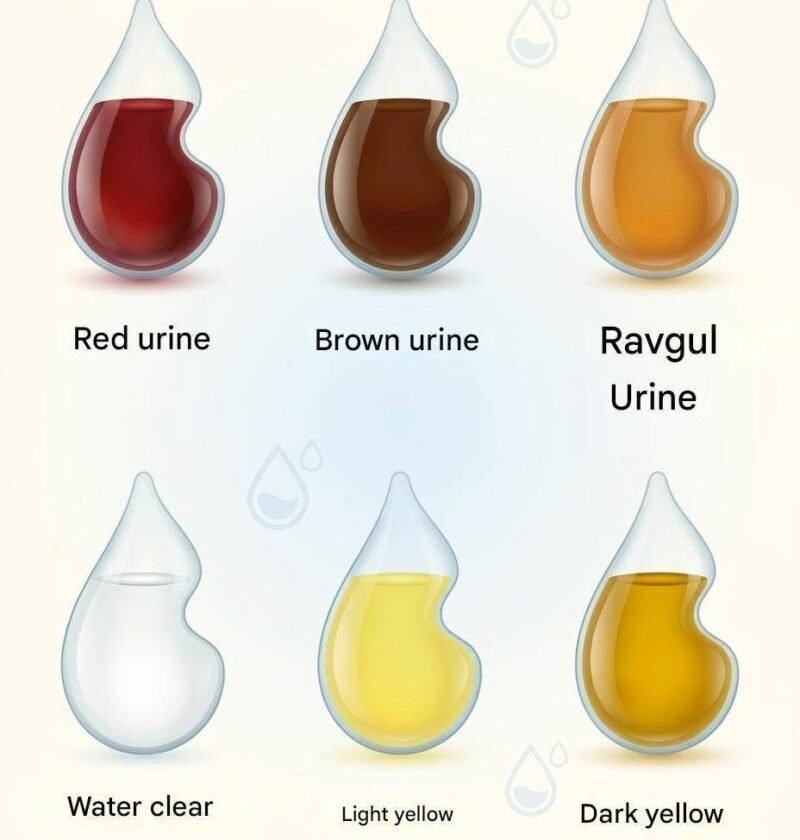
Urine color can provide useful clues, especially about hydration, but it can’t diagnose a medical condition by itself. Normal urine ranges from nearly clear to pale yellow or light amber.
C
Cleveland Clinic
+1
Clear: You may be drinking more fluid than you need. Occasional clear urine is usually harmless.
Pale yellow: Generally a good sign that you’re adequately hydrated.
Dark yellow/amber: Often means your urine is concentrated and you may need more fluids, particularly after sweating or exercise.
C
Cleveland Clinic
+1
Orange: Can result from dehydration, certain medications or food dyes, but persistent orange urine can sometimes be associated with liver or bile-duct problems.
C
Cleveland Clinic
Pink or red: Beets and some other foods can cause this, but it can also indicate blood in the urine, which may occur with a UTI, kidney stones, or other urinary-tract problems. Don’t assume it’s harmless.
N
nhs.uk
Brown or cola-colored: Severe dehydration can cause dark urine, but brown urine can also occur with liver problems or other medical conditions. If it doesn’t quickly improve with normal hydration, get medical advice.
C
Cleveland Clinic
Blue or green: Unusual, but certain medications, food dyes and, rarely, infections or other conditions can cause it. Persistent discoloration deserves evaluation.
C
Cleveland Clinic
Cloudy: Can occur with dehydration, a UTI, kidney stones or other conditions, particularly when accompanied by pain, burning or fever.
C
Cleveland Clinic
Foamy or persistently bubbly: Occasional bubbles can simply result from a forceful urine stream. Persistent foamy urine, especially with swelling, can be associated with excess protein in the urine and should be checked.
C
Cleveland Clinic
+1
One important caution
Red, pink, or cola-colored urine shouldn’t be ignored, particularly if you haven’t eaten something that can explain the color. Blood in urine should be medically evaluated even when there is no pain.
N
nhs.uk
+1
Also remember that vitamins, medications, foods and hydration can all change urine color, so color alone isn’t a reliable diagnosis.
C
Cleveland Clinic
C
C
N
Sources