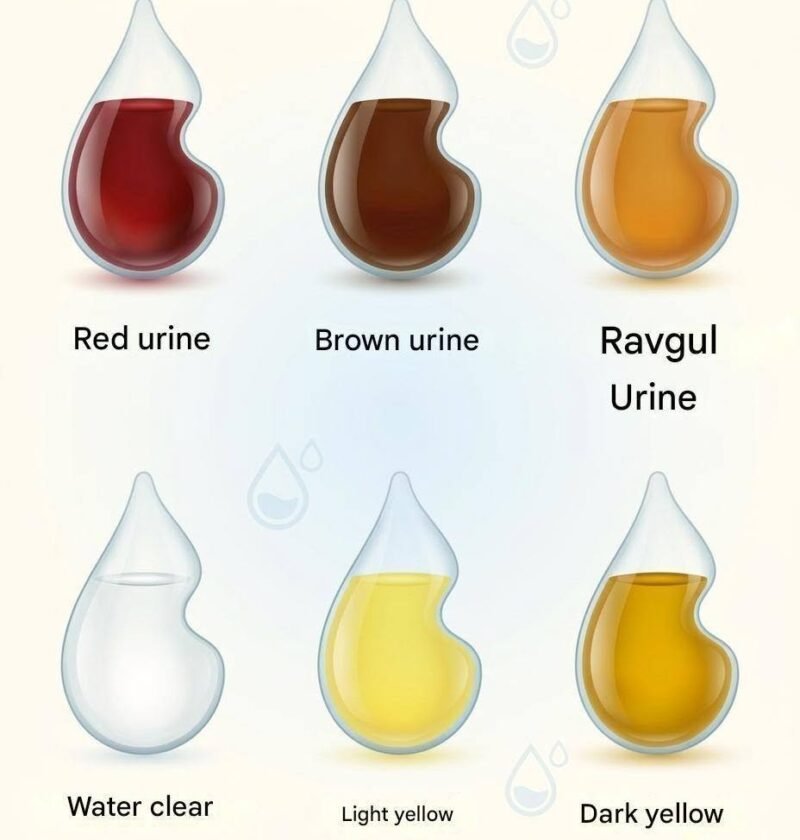
What does the color of your urine say about your health?
Urine color can provide a useful clue about hydration, but it isn’t a complete health test. Normal urine ranges from nearly clear to pale or dark yellow/amber, and its color can also be affected by foods, vitamins and medications.
G
Guy’s and St Thomas’ NHS
+1
Very pale or pale yellow: Usually suggests you are adequately hydrated.
Bright or dark yellow: Often means your urine is more concentrated and you may need more fluids, particularly if you’re also thirsty or urinating less frequently.
N
nhs.uk
Orange: Can occur with significant concentration/dehydration, but medications and other causes can also change urine color. Persistent orange urine deserves attention.
Pink or red: This can be caused by foods such as beetroot, but it can also indicate blood in the urine. Blood should be medically checked, even if it happens only once.
N
nhs.uk
Brown or very dark urine: Severe dehydration can cause very concentrated urine, but brown urine can have other causes, including medications or blood, so don’t simply assume it’s dehydration.
L
Lancashire NHS Trust
+1
Cloudy urine: Can occur with a urinary infection, particularly when accompanied by burning, increased frequency, pain, fever or an unpleasant smell.
N
nhs.uk
+1
Bright/neon yellow: Often isn’t alarming. Vitamin B6 and some vitamin supplements can make urine very yellow.
L
Lancashire NHS Trust
+1
What about urine first thing in the morning?
It’s normal for your first urine of the day to be darker than urine later in the day, because you haven’t had fluids for several hours while sleeping.
F
Frimley ICB
When should you get checked?
Don’t rely on color alone. Seek medical advice if you notice red or dark-brown urine, especially if you’re not sure whether it contains blood. Also get checked if urine changes are persistent or occur with pain, fever, burning, back/flank pain, or significant changes in how often you urinate.
N
nhs.uk
+1
Bottom line: For most people, pale yellow urine is a reasonable sign of adequate hydration, while darker yellow urine often means you need more fluid. But unusual colors—especially red or brown—shouldn’t automatically be attributed to dehydration.
G
N
L
Sources