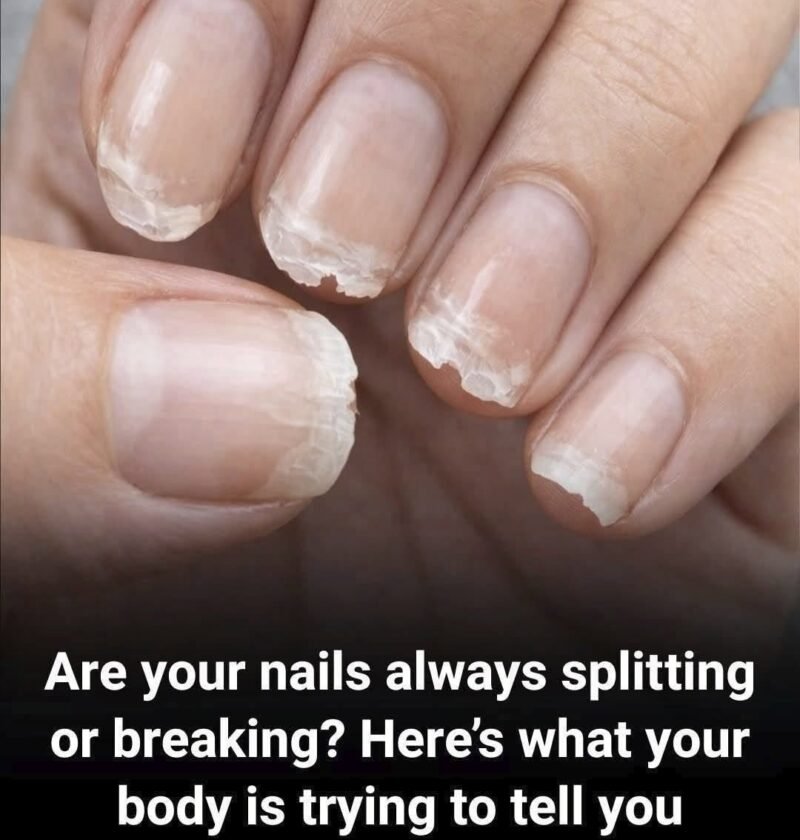
Weak or Brittle Nails: What Your Body May Be Telling You
Weak, splitting, or brittle nails are common, and they don’t automatically mean something is wrong with your health. Frequent exposure to water, cleaning products, nail polish remover, and normal aging can all make nails more fragile.
But persistent changes can sometimes provide a clue about an underlying problem.
🩸 1. Iron Deficiency
Thin nails that become spoon-shaped—curving inward in the middle—can be associated with iron deficiency anemia. If this change appears along with unusual tiredness, weakness, or pale skin, it’s worth discussing with a healthcare professional.
Don’t start taking iron supplements simply because your nails are brittle; a blood test can help determine whether you actually have an iron deficiency.
🦋 2. Thyroid Problems
Thyroid disorders can sometimes cause nails to become dry, brittle, soft, or prone to peeling and crumbling. Other symptoms, such as unexplained weight changes, fatigue, or changes in hair, may provide additional clues.
🍄 3. Fungal Infection
If a nail becomes thick, yellow, crumbly, or increasingly distorted, a fungal infection is one possibility. Proper diagnosis matters because treatment depends on the cause.
🧴 4. Too Much Water or Chemicals
Repeatedly soaking and drying your hands, using detergents, or exposing nails to harsh cleaning products can contribute to brittleness.
Wearing protective gloves during household cleaning and regularly moisturizing your hands and nails may help.
🧬 5. Skin Conditions
Conditions such as psoriasis and eczema can affect the nails, sometimes producing pits, grooves, crumbling, or separation from the nail bed.
👵 6. Sometimes It’s Simply Aging
Nails naturally change as we get older and may become thinner, drier, and more brittle. Brittle nails are often a normal part of aging.
💅 How to Protect Brittle Nails
- Keep nails reasonably short.
- Wear gloves when using household cleaners.
- Avoid repeatedly soaking your hands in water.
- Moisturize your hands and nails regularly.
- Don’t pick, peel, or aggressively file the nails.
- Avoid using nail products that repeatedly irritate your nails.
🩺 When Should You Get Them Checked?
See a healthcare professional if nail changes are persistent, worsening, painful, associated with swelling, or accompanied by major changes in color, shape, or thickness.