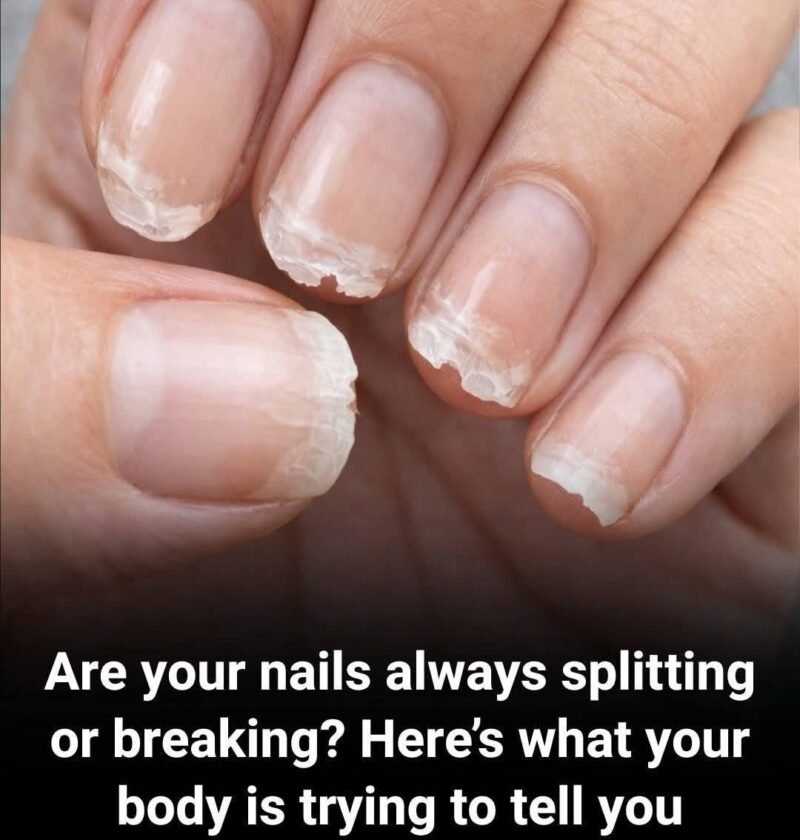
Most Common Causes of Weak or Brittle Nails (External vs. Internal)
| Category | What Actually Causes the Brittleness | Typical Clues |
| 1. Wet-Dry Cycles & Harsh Chemicals (Most Common) | Frequent handwashing, washing dishes without gloves, alcohol sanitizers, and acetone nail polish removers strip natural lipids holding keratin layers together. | Fingernails peel and split at the tips, while toenails remain strong and thick (a classic sign the cause is external, not nutritional). |
| 2. Natural Aging & Cold/Dry Weather | Nail growth slows after age 40–50 and natural nail-plate moisture drops, especially in dry winter air. | Fine vertical ridges (usually normal aging) paired with dry, easily chipped nail edges. |
| 3. Thyroid Imbalance (Hypothyroidism or Hyperthyroidism) | Both an underactive thyroid (slowed metabolism and reduced blood flow to the nail matrix) and an overactive thyroid weaken nail keratin structure. | Brittle nails paired with unexplained fatigue, dry skin, hair thinning, feeling unusually cold or hot, or weight changes. |
| 4. Iron Deficiency (With or Without Anemia) | Low iron stores (low serum ferritin) impair oxygen delivery to rapidly dividing nail-matrix cells. | Thin, brittle, or flattened/spoon-shaped nails (koilonychia) alongside tiredness, pale inner eyelids, or shortness of breath on exertion. |
| 5. Skin Conditions Affecting the Nail Matrix | Nail psoriasis, eczema, or fungal nail infections (onychomycosis) disrupt normal keratin formation at the nail root or nail bed. | Pitting (tiny pinpoint dents), yellowish discoloration, crumbling under the nail tip, or separation of the nail from the nail bed. |
What Clickbait Posts Get Wrong About Nail Remedies
-
“Take high-dose biotin gummies for rock-hard nails”: While small older studies suggested high-dose biotin (2.5 mg/day) might slightly thicken brittle nails in some people, evidence is limited—and megadose biotin falsely interferes with critical lab blood tests (including heart-attack troponin tests and thyroid panels).
-
“White spots on nails mean calcium deficiency”: Tiny white spots (punctate leukonychia) are almost always caused by minor bumps or manicures bruising the nail base weeks earlier, not low calcium.
-
“Nail hardeners with formaldehyde fix weak nails”: Formaldehyde-based hardeners initially stiffen nails but make them more rigid and prone to painful snapping over time.
Practical Steps That Actually Strengthen Nails (Takes 3–6 Months)
-
Wear Cotton-Lined Rubber Gloves whenever washing dishes, scrubbing, or handling household cleaners.
-
Moisturize Nails & Cuticles After Every Handwash: Rub plain petroleum jelly (Vaseline), thick hand cream, or mineral/jojoba oil directly into the nail plate and cuticle while skin is slightly damp.
-
Keep Nails Trimmed Short & File in One Direction: Short nails suffer far less mechanical leverage; use a fine-grit emery board or glass nail file in one direction rather than sawing back and forth.
-
Switch to Acetone-Free Remover and take periodic breaks from gel/acrylic manicures, which thin the nail plate during buffing and soaking.
-
See a Doctor If: Both fingernails AND toenails are brittle, nails develop spoon-shaped indentation, dark vertical streaks, pitting, or separation, or brittleness comes with fatigue, hair shedding, or weight changes—ask about checking CBC, ferritin, and thyroid (TSH).