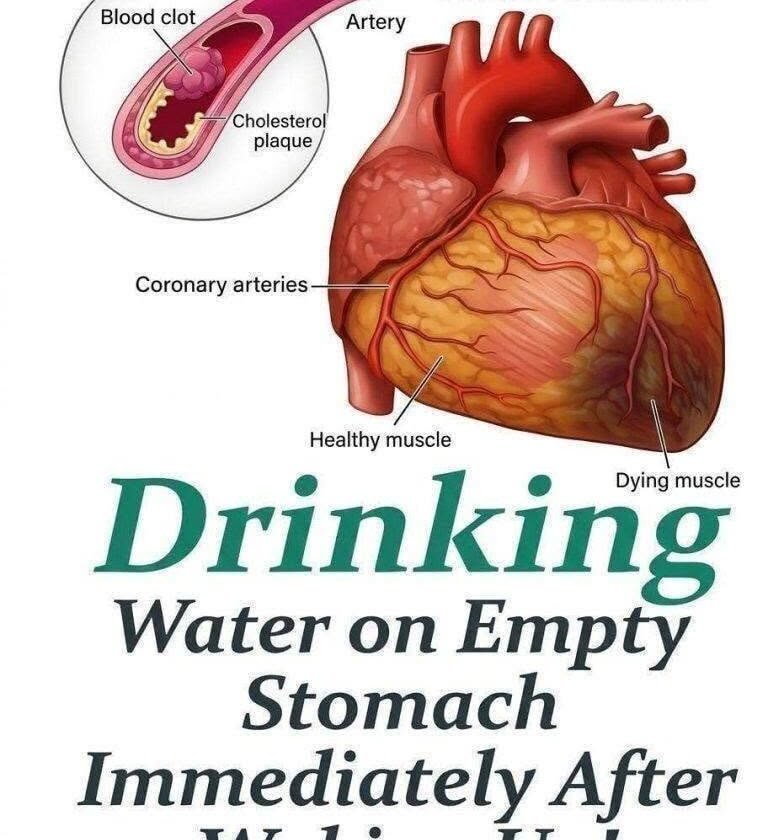
Headlines cut off right at “Did you know that drinking water on an empty stomach could be…” use a classic cliffhanger hook—usually leading into claims that drinking plain water first thing in the morning either cures high blood pressure, diabetes, and kidney stones (“Japanese water therapy”) or, in fear-based versions, “dilutes stomach acid” and harms digestion.
In human physiology, drinking a glass or two of plain water upon waking is a healthy, sensible habit that replaces overnight fluid loss—but it is not a medical cure-all, nor does it weaken stomach acid.
What Actually Happens When You Drink Water on an Empty Stomach
| Viral Claim | Physiological Reality | Practical Takeaway |
| 1. “Rehydrates Your Body & Eases Morning Sluggishness” | True. You lose roughly 300–500 mL of water overnight through breathing and light sweating. Drinking 1–2 glasses (250–500 mL) upon waking restores blood volume, supports circulation, and helps shake off mild morning dehydration fatigue. | A great daily anchor habit before tea, coffee, or breakfast. |
| 2. “Stimulates Bowel Movements” | Helpful for many people. Fluid entering an empty stomach triggers a mild gastrocolic reflex and keeps stool softer, making morning bowel movements easier. | Works well alongside dietary fiber and regular meal timing. |
| 3. “Flushes Out Toxins, Melts Fat & Cures Diabetes or Hypertension” | Exaggerated. Your kidneys and liver already filter waste continuously whenever you stay adequately hydrated throughout the day. Water has zero calories—so replacing sugary morning drinks with water helps weight control, but morning water alone does not cure chronic diseases. | Stay steadily hydrated all day rather than chugging huge volumes at once. |
| 4. “Dilutes Stomach Acid & Ruins Digestion” | False. The stomach rapidly adjusts acid secretion (hydrochloric acid) when food arrives, and plain water passes through an empty stomach into the small intestine within 10–20 minutes. | Plain water before or with meals supports normal digestion rather than harming it. |
Two Important Caveats to Keep in Mind
-
Don’t Force Extreme Volumes (“Water Therapy” Liters at Once): Drinking 1 to 1.5 liters of water in a few minutes is uncomfortable, causes bloating/nausea, and—in extreme excess—can dilute blood sodium (hyponatremia). One to two standard glasses (250–500 mL) is plenty.
-
Medical Fluid Limits Come First: People with advanced heart failure, severe kidney disease, or liver cirrhosis who have been given a daily fluid restriction by their doctor should count morning water within their prescribed limit.