Headlines claiming “New method: colonoscopy will no longer be an invasive examination” use a breakthrough-miracle hook—making it sound as though traditional colonoscopy has already been retired everywhere and replaced by a single painless pill or scan.
In gastroenterology, several non-invasive and minimally invasive screening alternatives really do exist and continue to improve—including stool DNA/FIT tests, CT colonography (“virtual colonoscopy”), and ingestible colon capsule cameras—but traditional optical colonoscopy remains the gold standard, because it is the only method that can both detect and remove precancerous polyps during the exact same procedure.
How Non-Invasive Alternatives Compare to Standard Colonoscopy
| Screening Method | How It Works (Invasive or Not?) | What It Catches Best | Key Limitations |
| 1. Stool-Based Tests (FIT & Multi-Target Stool DNA, e.g., Cologuard) | Completely non-invasive at-home stool sample; no bowel prep, sedation, or camera required. | Detects hidden microscopic blood (FIT) or altered polyp/tumor DNA (stool DNA) with high sensitivity for established cancers. | Misses many small-to-medium precancerous polyps; any positive result still requires a standard colonoscopy to inspect and remove growths. |
| 2. Blood-Based Screening Tests (e.g., ctDNA Blood Draws) | Minimally invasive routine blood draw looking for circulating tumor DNA fragments. | Convenient option for average-risk adults who refuse stool tests or colonoscopy. | Lower sensitivity for precancerous polyps compared to colonoscopy or stool DNA; a positive blood test still requires a follow-up colonoscopy. |
| 3. Colon Capsule Endoscopy (“Camera Pill”) | Minimally invasive swallowable vitamin-sized capsule with two tiny cameras taking thousands of photos as it passes through the colon. | Visualizes the colon lining directly without sedation or a scope; useful when a standard scope cannot pass a tight bend. | Still requires thorough laxative bowel prep, cannot steer or wash away residue, and cannot remove polyps (requiring a standard colonoscopy if polyps are seen). |
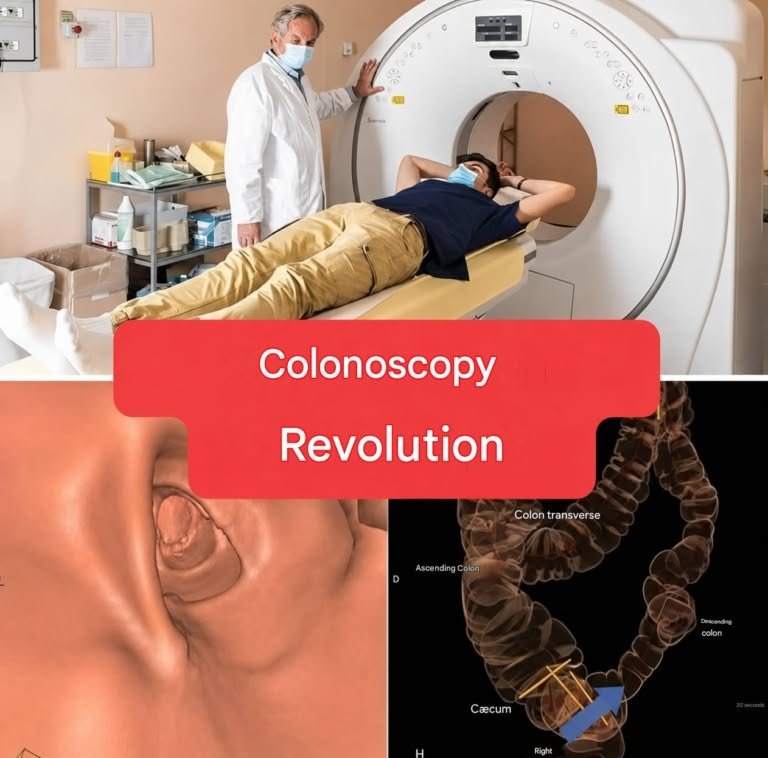
| 4. CT Colonography (“Virtual Colonoscopy”) | Minimally invasive specialized low-dose CT scan using a small rectal tube to gently inflate the colon with air/CO₂; no sedation needed. | Creates 3D images of the colon lining in ~10–15 minutes. | Still requires full bowel prep, involves low-dose radiation, and cannot biopsy or remove polyps. |
| 5. Optical Colonoscopy (Gold Standard) | Flexible lighted camera under sedation; therapeutic as well as diagnostic. | Finds AND immediately removes precancerous polyps before they ever turn into colorectal cancer. | Requires bowel prep, a driver after sedation, and carries a very small risk (~1 in 1,000–2,000) of bleeding or perforation. |
What Clickbait Posts Leave Out
-
Non-Invasive Screening Is for Average-Risk Adults Without Symptoms: If you have rectal bleeding, unexplained iron-deficiency anemia, persistent bowel habit changes, unexplained weight loss, or a strong family history of colon cancer/polyps, guidelines recommend going straight to a diagnostic optical colonoscopy rather than starting with a stool, blood, or capsule test.
-
The Bowel Prep Still Applies to Visual Tests: Even when no long scope is used (such as colon capsule endoscopy or CT colonography), you still have to drink a laxative prep beforehand—because leftover stool hides flat or small polyps from any camera or X-ray.
(Note: Your message ended with
(1/2)—feel free to send part 2 whenever you’re ready!)