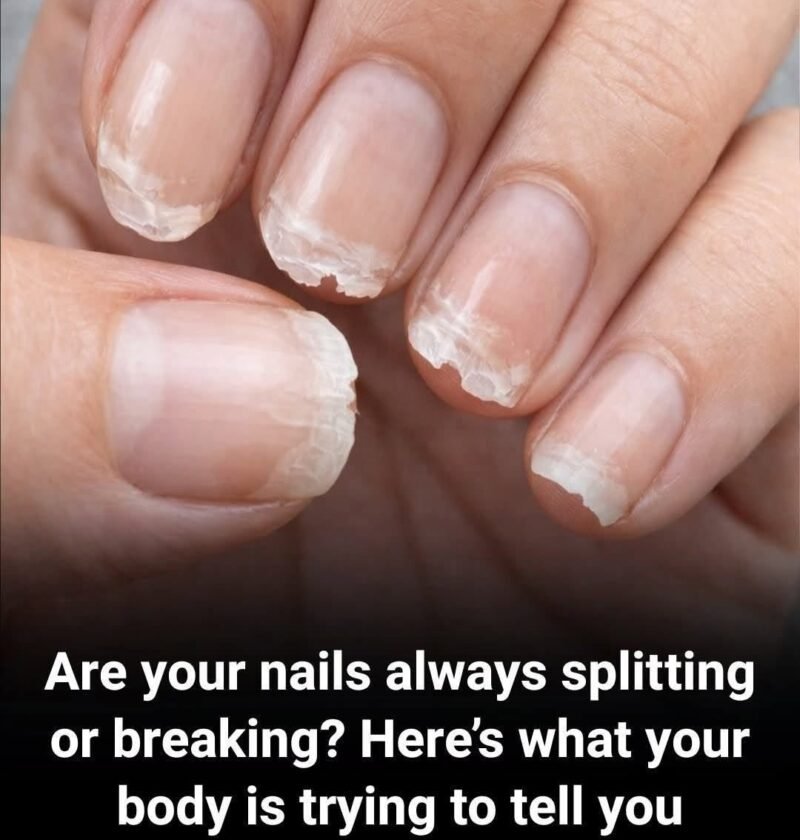
Weak, splitting, or brittle nails are common and usually not a sign of a serious disease. Nails can become more fragile with age, frequent exposure to water or cleaning products, repeated manicures, or minor trauma.
What brittle nails can sometimes indicate
-
Iron deficiency: May cause thin or brittle nails; occasionally the nails become spoon-shaped.
-
Thyroid problems: Both underactive and overactive thyroid conditions can affect nail growth and texture.
-
Nail fungus: More likely when a nail becomes thick, yellow, crumbly, or separates from the nail bed.
-
Psoriasis or other skin conditions: Can cause pits, ridges, discoloration, or separation of the nail.
-
Nutritional deficiencies: Severe deficiencies can affect nails, although taking supplements isn’t automatically helpful if you aren’t deficient.
-
Certain medications or systemic illnesses: These can temporarily disrupt nail growth, sometimes producing horizontal grooves.
When to have it checked
See a healthcare professional if brittle nails are persistent, worsening, or accompanied by fatigue, unexplained weight changes, hair loss, skin changes, swelling, or other new symptoms.
A new dark streak in one nail, particularly if the pigment extends onto the surrounding skin, should also be evaluated promptly because, although uncommon, it can be a sign of nail melanoma.
For ordinary brittle nails, keeping them trimmed, wearing gloves for prolonged water/chemical exposure, moisturizing the nails and cuticles, and avoiding aggressive manicures can help.