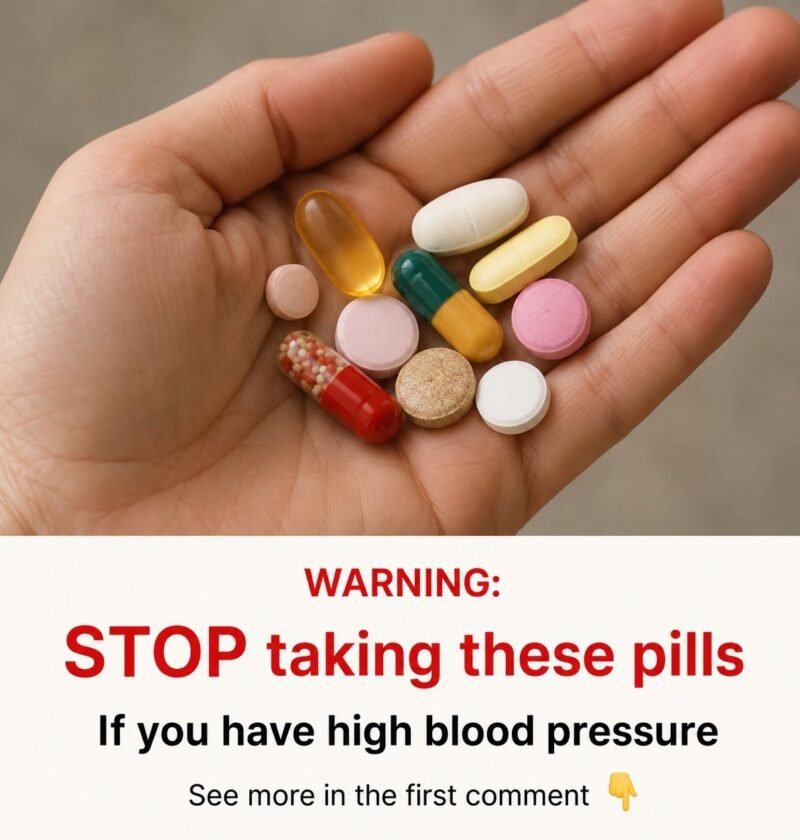
WARNING: STOP Taking These Pills If You Have High Blood Pressure
When managing hypertension (high blood pressure), keeping your numbers in a safe range depends heavily on both your prescribed medications and your daily over-the-counter habits. Many people are unaware that common over-the-counter medications and supplements can quietly spike blood pressure, counteract heart medications, or force the cardiovascular system to work dangerously hard.
If you have high blood pressure, medical experts advise caution—and in some cases, complete avoidance—of specific types of pills.
1. Nonsteroidal Anti-Inflammatory Drugs (NSAIDs)
-
Examples: Ibuprofen (Advil, Motrin), Naproxen (Aleve), and High-Dose Aspirin.
-
The Danger: NSAIDs cause your body to retain sodium and water while constricting blood vessels. For someone with high blood pressure, this combination forces the heart to pump against higher resistance, causing blood pressure readings to spike and rendering many prescription blood pressure medications (like ACE inhibitors or diuretics) less effective.
2. Decongestants (Oral Cold and Sinus Medications)
-
Examples: Pseudoephedrine and Phenylephrine (found in many multi-symptom cold, flu, and allergy pills).
-
The Danger: Decongestants work by constricting (narrowing) blood vessels in your nasal passages to reduce swelling and congestion. Unfortunately, they don’t just target your nose—they narrow blood vessels throughout your entire body, which can cause a rapid, dangerous rise in blood pressure and heart rate.
3. Certain Herbal Supplements and Weight Loss Pills
-
Examples: Ephedra (ma huang), bitter orange, licorice root, and high-dose St. John’s Wort.
-
The Danger: Just because a supplement is “natural” doesn’t mean it’s safe for your heart. Herbal stimulants like ephedra and bitter orange mimic adrenaline, driving up blood pressure and heart rate. Licorice root contains compounds that cause the body to retain sodium and lose potassium, directly triggering hypertension.
4. Prescription Corticosteroids
-
Examples: Prednisone, Cortisone, and Dexamethasone.
-
The Danger: Often prescribed for severe inflammation, asthma flare-ups, or autoimmune conditions, corticosteroids cause fluid retention and alter how your kidneys process salt. Long-term or even short-term high-dose use can significantly elevate blood pressure readings.
🚨 IMPORTANT MEDICAL DISCLAIMER: Never stop taking a prescribed medication (such as a steroid or an anti-inflammatory recommended by your doctor) without consulting your physician first. However, always check ingredient labels on over-the-counter cold and pain medications, and ask your pharmacist or doctor for “blood-pressure-safe” alternatives (such as acetaminophen for pain or saline nasal sprays for congestion).
Have you ever noticed your blood pressure reading creep up after taking a cold medicine or pain reliever?