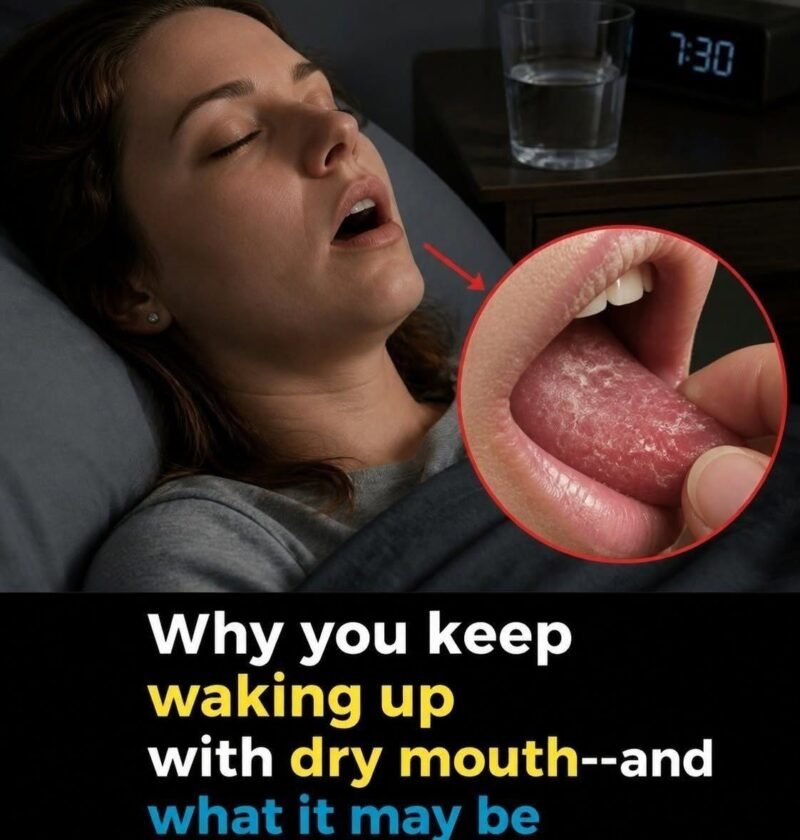
Waking up with a dry mouth—medically known as xerostomia—is a very common morning complaint. While it is often just a temporary annoyance, your body may be trying to communicate several different things depending on your habits, environment, or health.
Here is what waking up with a dry mouth might be signaling:
1. You Are Breathing Through Your Mouth at Night
This is by far the most frequent cause. If your nasal passages are blocked or restricted, you naturally default to mouth breathing overnight. A steady stream of air flowing over your oral tissues for 7 to 8 hours rapidly evaporates your saliva.
-
Common triggers: A deviated septum, nasal polyps, seasonal allergies, a cold, a sinus infection, or mild obstructive sleep apnea (OSA).
2. Side Effects from Medications
Hundreds of prescription and over-the-counter drugs list dry mouth as a primary side effect.
-
Frequent culprits: Antihistamines, decongestants, blood pressure medications (such as diuretics), antidepressants, and anxiety drugs. If you have recently started a new medication, this is a strong possibility.
3. Mild Dehydration or Evening Habits
If you aren’t drinking enough water throughout the day—or if you consumed alcohol or caffeinated beverages close to bedtime—your overall hydration drops. Both alcohol and caffeine act as diuretics, decreasing the amount of saliva your salivary glands produce overnight.
4. Snoring or Obstructive Sleep Apnea (OSA)
Severe snoring and sleep apnea force air through the mouth aggressively while disrupting normal breathing patterns. If you wake up gasping, feel chronically fatigued despite a full night’s rest, or have been told you stop breathing while asleep, sleep apnea may be involved.
5. Natural Aging and Hormonal Changes
As we get older, our bodies naturally produce less saliva. Additionally, hormonal shifts (such as those experienced during menopause) can alter moisture levels in the mucous membranes throughout the body, including the mouth.
Simple Ways to Find Relief
-
Keep Water Close: Keep a glass of water on your nightstand to take small sips if you wake up feeling parched.
-
Use a Humidifier: Running a cool-mist humidifier in your bedroom adds moisture back into the air, preventing your airways and mouth from drying out.
-
Address Nasal Congestion: If you are a mouth breather due to a stuffy nose, try saline rinses, nasal strips, or addressing underlying allergy triggers.
-
Limit Evening Alcohol and Caffeine: Cutting back on these beverages before bed helps maintain better overnight hydration.
A Note on Dental Health
Saliva is your mouth’s natural defense mechanism against tooth decay and gum disease because it washes away food particles and neutralizes damaging acids. Chronic dry mouth increases your risk of cavities, making consistent brushing and flossing especially important.
Are you experiencing any other symptoms along with the dry mouth, such as nasal congestion, snoring, or starting a new medication?