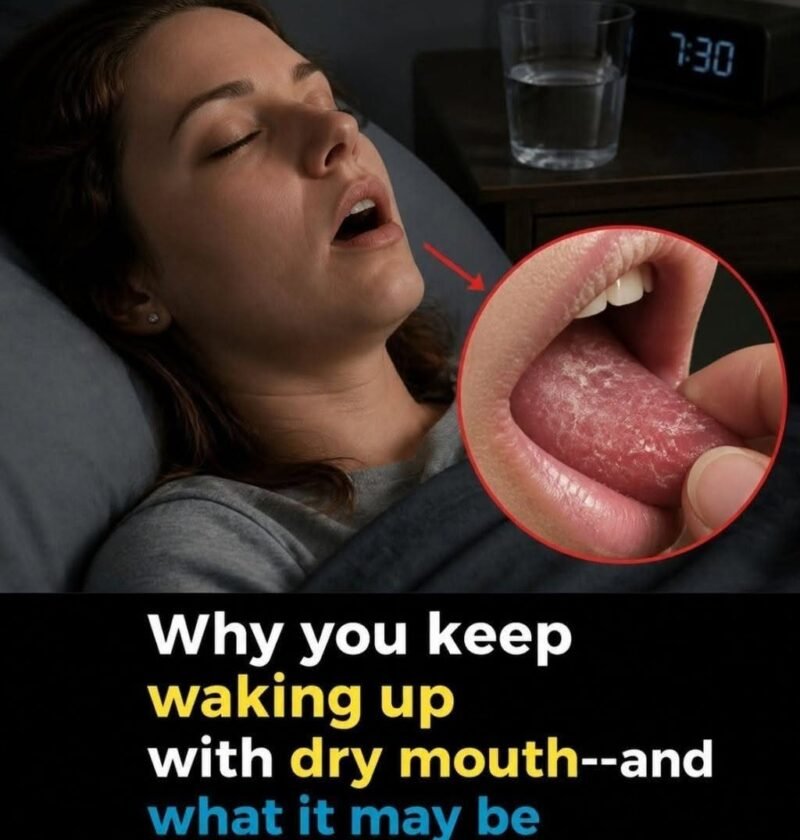
Waking up with a mouth that feels like the Sahara desert is uncomfortable, and it often happens for reasons that go far beyond just forgetting to drink a glass of water before bed. Medically known as xerostomia, waking up with a dry mouth is your body’s way of signaling that your salivary glands slowed down or stopped producing enough moisture overnight.
What Waking Up with Dry Mouth Might Be Telling You
-
You Are Sleeping with Your Mouth Open (Mouth Breathing)
-
What happens: If your nasal passages are blocked due to allergies, a deviated septum, a cold, or sleep apnea, you naturally switch to breathing through your mouth while you sleep. The constant airflow rapidly evaporates the thin layer of saliva coating your oral tissues.
-
-
Obstructive Sleep Apnea (OSA)
-
What happens: Dry mouth is a classic red flag for sleep apnea. When your airway repeatedly collapses or narrows during the night, you are forced to gasp for air through your mouth, leading to severe dryness by morning.
-
-
Medication Side Effects
-
What happens: Hundreds of common prescription and over-the-counter medications list dry mouth as a primary side effect. This includes antihistamines, decongestants, blood pressure medications (like diuretics), antidepressants, and anxiety drugs.
-
-
Dehydration
-
What happens: If your overall daily fluid intake is low, or if you drank alcohol or caffeinated beverages close to bedtime (both of which act as diuretics), your body prioritizes vital organs and dials back saliva production.
-
-
Age-Related Changes
-
What happens: As people get older, salivary gland function naturally decreases slightly, and older adults are also more likely to take multiple medications that compound the issue.
-
-
Underlying Health Conditions
-
What happens: Chronic dry mouth can sometimes point to systemic issues, such as diabetes (where high blood sugar pulls water from tissues) or autoimmune conditions like Sjögren’s syndrome, which specifically attacks moisture-producing glands.
-
Simple Ways to Find Relief and Protect Your Smile
Saliva isn’t just for comfort; it washes away food particles, neutralizes acids, and protects your teeth from decay. If you want to combat morning dry mouth, try these steps:
-
Use a Humidifier: Running a cool-mist humidifier in your bedroom adds moisture back into the air, preventing your mouth and throat from drying out as you breathe.
-
Breathe Through Your Nose: If nasal congestion is the culprit, try saline nasal sprays, allergy management, or breathing strips before bed.
-
Keep Water Close By: Keep a glass of water on your nightstand to take small sips if you wake up parched.
-
Avoid Evening Triggers: Cut back on alcohol, sugary drinks, and salty foods right before bed.
-
Use Saliva Substitutes or Dry Mouth Lozenges: Over-the-counter artificial saliva sprays or gentle moisturizing rinses designed for nighttime use can coat your mouth and keep it comfortable until morning.
[!NOTE]Saliva is your teeth’s natural shield against cavities. If waking up with a dry mouth is a daily occurrence, it’s worth mentioning to your dentist or doctor to rule out underlying sleep or medication issues.
Do you notice any other symptoms when you wake up, like a sore throat, nasal congestion, or daytime fatigue?