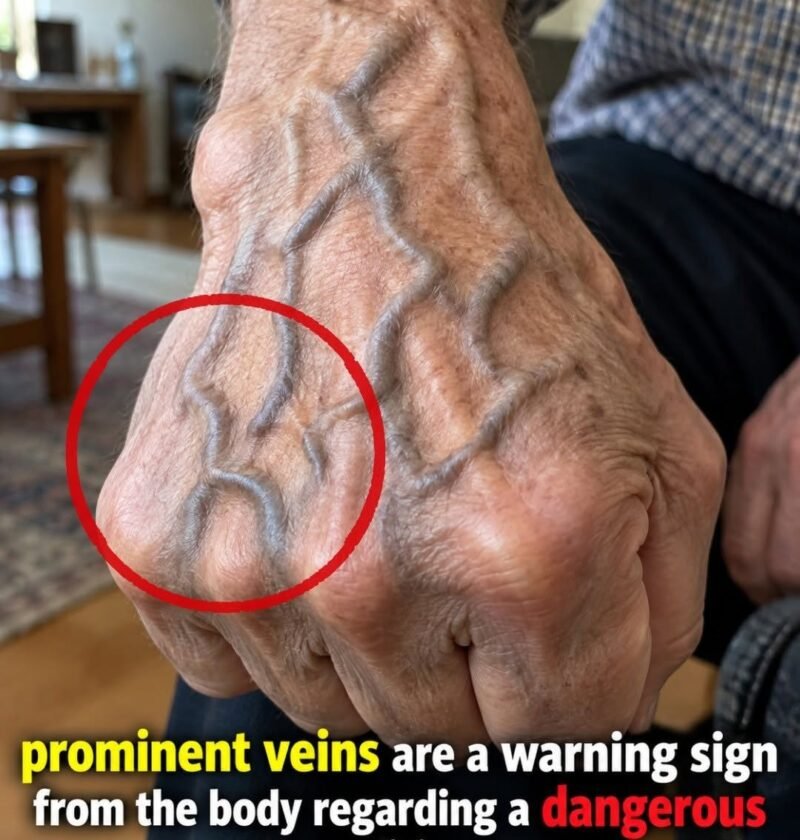
Visible blue veins after 60 are often a normal consequence of aging, rather than a sign that your blood flow is “screaming” that something is wrong. As skin becomes thinner and loses some of its fatty tissue with age, veins can become much easier to see—especially on the hands, arms, legs, and feet.
What visible veins can mean
-
Normal aging: Thinner skin and reduced subcutaneous fat make underlying veins more prominent.
-
Heat or exercise: Veins temporarily dilate when you’re warm or physically active.
-
Low body fat: Less tissue over the veins can make them more noticeable.
-
Varicose veins: Enlarged, twisted veins—usually in the legs—can develop when valves in the veins don’t work properly.
-
Chronic venous insufficiency: Leg swelling, aching, heaviness, itching, or skin discoloration can indicate impaired venous return.
🚨 When to get medical attention
A new, prominent vein on one leg accompanied by swelling, warmth, redness, or pain needs prompt medical assessment because a deep-vein thrombosis (DVT) is possible.
Seek emergency care if leg symptoms occur together with sudden shortness of breath, chest pain, coughing blood, fainting, or rapid heartbeat, which can indicate a pulmonary embolism.
Bottom line
Visible blue veins by themselves usually don’t mean poor circulation. What matters is whether they’re accompanied by swelling, pain, skin changes, ulcers, or sudden changes.
If you tell me where the veins are visible (hands, arms, legs, chest, etc.) and whether there’s swelling or pain, I can explain the most likely possibilities.