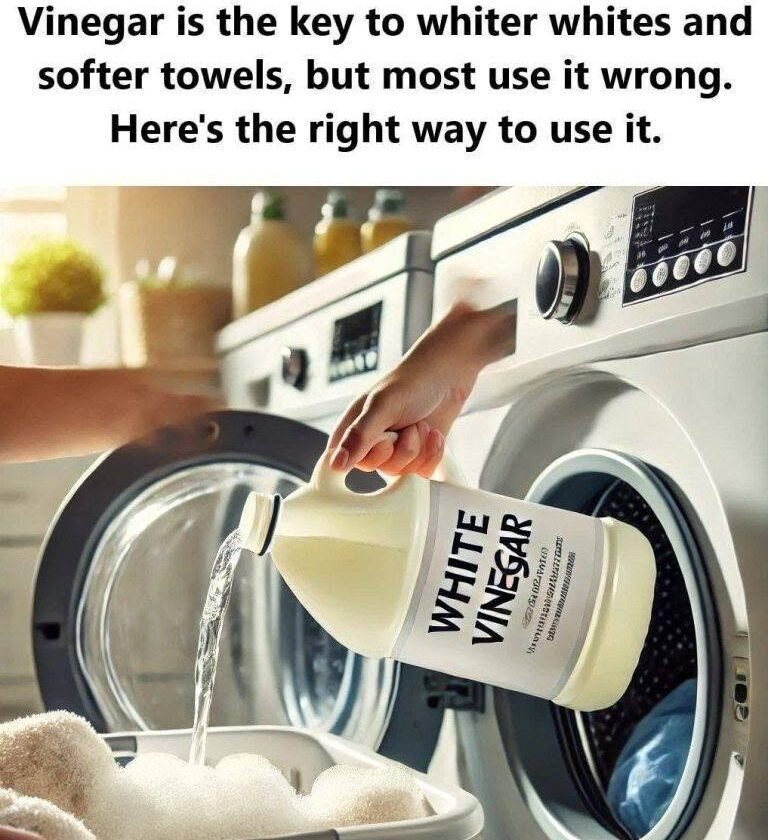
When viral laundry hacks claim that white vinegar is the ultimate secret to “whiter whites, softer towels, and a pristine washing machine”—while warning that you’ve been using it all wrong—they are tapping into a very real eco-friendly cleaning desire. Vinegar is cheap, natural, and acidic, making it a genuinely useful tool in the laundry room.
However, internet laundry tips frequently exaggerate what vinegar can do (like turning yellowed, dingy cotton blindingly white) or recommend dangerous chemical combinations that can damage your clothes and appliances.
Here is the clinical cleaning reality of how vinegar behaves in laundry, how to use it correctly, and what it cannot do:
What Vinegar Actually Does in Your Laundry
Because white distilled vinegar is mildly acidic (containing about 5% acetic acid), it interacts with fabrics and detergent residues in specific ways:
-
It Softens Fabrics Naturally:
-
The Reality: Commercial fabric softeners work by coating fabric fibers in a waxy, lubricating film. Over time, this buildup makes towels less absorbent (trapping water and oils) and coats clothes in residues. Vinegar removes this residual detergent buildup from fibers, allowing towels to return to their naturally fluffy, highly absorbent state.
-
-
It Neutralizes Odors:
-
The Reality: Vinegar breaks down alkaline odor compounds (like sweat, mildew, or pet smells) rather than just masking them with heavy artificial perfumes.
-
-
It Fights Static and Brightens Colors:
-
The Reality: By stripping away soap scum and mineral deposits that dull fabrics, vinegar helps dark clothes look sharper and prevents static cling.
-
The Big Laundry Myths: What Vinegar Cannot Do
-
The “Blindingly White” Myth: Vinegar is not a bleaching agent. While it can help lift dull dinginess caused by soap buildup, it will not turn yellowed, aged cotton or stained white shirts back to brand-new brilliance. For true whitening, you still need oxygen bleach or traditional laundering methods.
-
The “Pour It Directly on Stains” Mistake: Pouring undiluted vinegar directly onto delicate fabrics and letting it sit can weaken natural fibers or strip certain dyes over time.
The Right Way to Use Vinegar in Your Laundry Routine
To get the benefits of vinegar without damaging your clothes or your washing machine, follow these golden rules:
-
Use It in the Rinse Cycle (Not the Wash Cycle):
-
The Right Way: Add 1/2 cup to 1 cup of white distilled vinegar directly into your washing machine’s fabric softener dispenser (or pour it straight into the drum during the final rinse cycle).
-
Why: If you add vinegar at the very beginning of the wash cycle alongside your laundry detergent, the acid will neutralize the alkaline components of your soap, rendering your detergent much less effective. Putting it in the rinse cycle ensures it strips soap residue and softens fabrics right at the end.
-
-
Never Mix Vinegar with Chlorine Bleach:
-
The Critical Safety Rule: Never, under any circumstances, mix vinegar (an acid) with chlorine bleach. Doing so causes a chemical reaction that releases toxic, highly irritating chlorine gas, which can cause severe respiratory distress and chemical burns.
-
-
Protect Your Washing Machine Gaskets:
-
While running a cup of vinegar through an empty hot water cycle once a month is a fantastic way to clean mineral scale and mold buildup from your washing machine drum, be careful not to let harsh, undiluted vinegar sit for hours against the rubber hoses or internal plastic seals, as long-term acidity can degrade rubber components.
-