Yes—white vinegar can be useful in laundry, but it’s not a magic whitening agent, and using it incorrectly can damage clothes or your washing machine.
🧺 The right way to use vinegar
For softer towels:
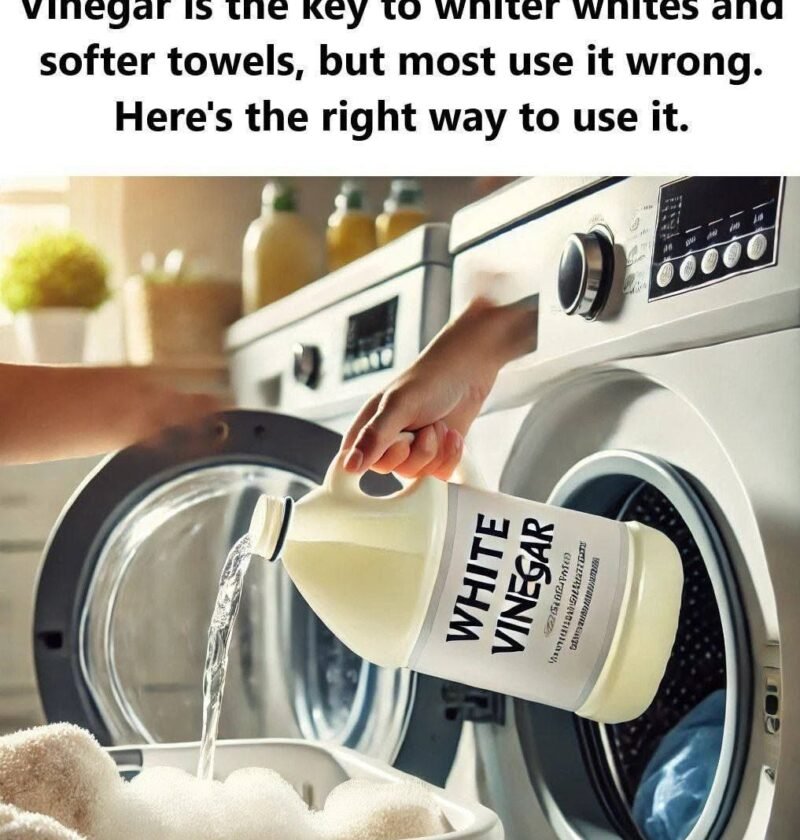
Add about ½ cup (120 mL) of plain distilled white vinegar to the washing machine’s fabric-softener dispenser during the rinse cycle. Vinegar can help remove detergent and mineral residue, leaving towels feeling less stiff.
For odors:
A small amount of vinegar in the rinse cycle can help reduce some lingering odors. Wash normally afterward.
For white clothes:
Vinegar can help remove some detergent/mineral buildup that makes fabrics look dull, but it does not bleach fabric like chlorine bleach or oxygen bleach. For genuinely yellowed whites, a laundry product designed for whitening is generally more effective.
⚠️ Important mistakes to avoid
Never mix vinegar with chlorine bleach. The combination can release dangerous chlorine gas.
Don’t pour concentrated vinegar directly onto delicate fabric.
Don’t use vinegar as a replacement for detergent—it doesn’t provide the cleaning action needed to remove normal dirt and oils.
Avoid assuming vinegar is suitable for every washing machine; some manufacturers advise against repeated use because its acidity may affect rubber components over time.
Don’t use vinegar together with commercial fabric softener in the same wash.
Best practical approach: Use detergent for cleaning, and if your machine manufacturer permits it, use a modest amount of diluted white vinegar in the rinse/softener compartment rather than directly on your clothes.
If you tell me whether you’re trying to whiten white clothes, soften towels, or remove a specific odor, I can give you the safest method for that problem.