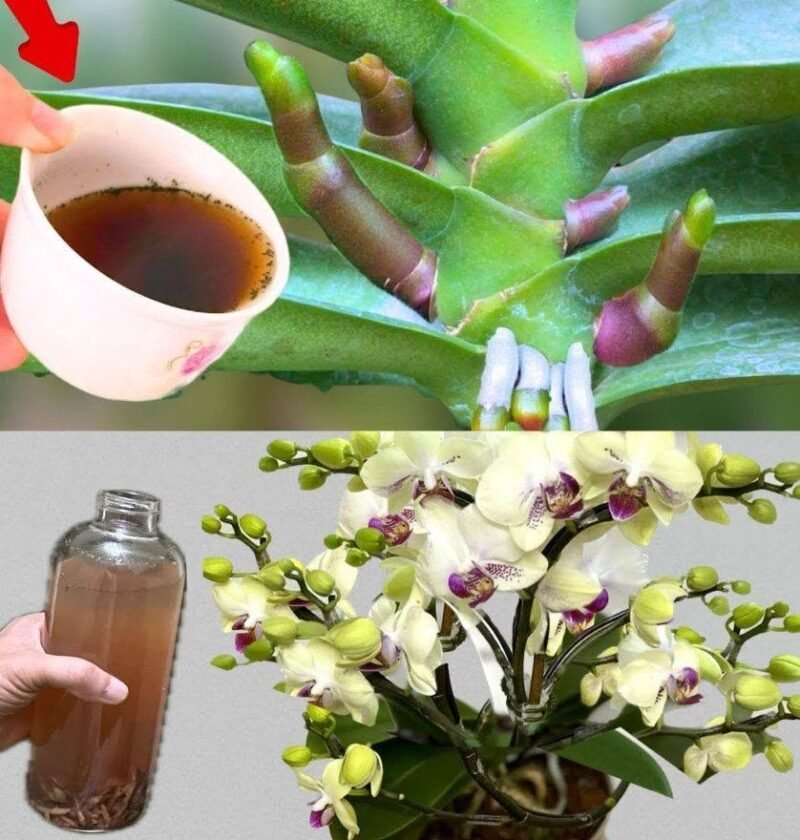
🌸 Very Leafy Orchid? Water It This Way for Healthier Growth
If your orchid has lots of leaves but isn’t flowering well, you don’t need a secret fertilizer. Proper watering, light, roots, and nutrition matter much more.
💧 The best “water” for orchids
For most common orchids, especially Phalaenopsis, use plain water that isn’t excessively hard or salty. Rainwater or filtered water can work well if your tap water is very mineral-heavy.
Don’t add sugar, milk, coffee, vinegar, or random kitchen ingredients to the water. These viral remedies can encourage mold, pests, or root problems.
How to water correctly
- Check the roots or potting medium first. If it’s still wet, wait.
- Water thoroughly so excess water drains from the pot.
- Never leave the orchid sitting in water.
- Keep water out of the crown—the point where the leaves meet—because trapped water can encourage rot.
- Allow the potting medium to become partly dry before watering again.
🌱 For more leaves and flowers
Give the orchid bright, indirect light, good air circulation, and an appropriate orchid fertilizer during active growth. A healthy root system is more important than simply watering more often.
If you tell me what type of orchid you have (or upload a photo), I can give you a specific watering and feeding routine.