Real Warning Signs of Kidney Trouble
-
Urination Changes:
-
Persistent foamy or bubbly urine: Bubbles that remain after flushing can point to excess protein leaking into the urine (proteinuria), one of the earliest physical signs of kidney filter stress.
-
Pink, red, or cola-colored urine: Blood in the urine (hematuria) from damaged filters, kidney stones, or infection.
-
Frequent nighttime urination (nocturia): Kidneys losing the ability to concentrate urine normally overnight.
-
Sharp drop in urine output: A warning sign of acute kidney injury or urinary blockage.
-
-
Fluid Retention:
-
Morning puffiness around the eyes: Protein loss drops blood albumin, allowing fluid to pool in the loose tissue around the eyelids.
-
Swelling in the ankles, feet, or hands: Damaged kidneys struggle to clear excess sodium and fluid.
-
-
Waste & Mineral Buildup (Usually Later Stages):
-
Persistent, severe skin itching: Driven by high blood phosphorus and mineral imbalances.
-
Metallic taste in the mouth or ammonia breath: Caused by urea breaking down in saliva.
-
Nausea, poor appetite, and unintentional weight loss: Uremic toxins irritating the stomach.
-
Muscle cramps (especially in the calves at night): Linked to low calcium or abnormal potassium/phosphorus levels.
-
-
Hormone-Related Anemia:
-
Deep fatigue, weakness, shortness of breath, and pale skin: Healthy kidneys produce erythropoietin (EPO) to trigger red blood cell production; declining kidneys often lead to anemia.
-
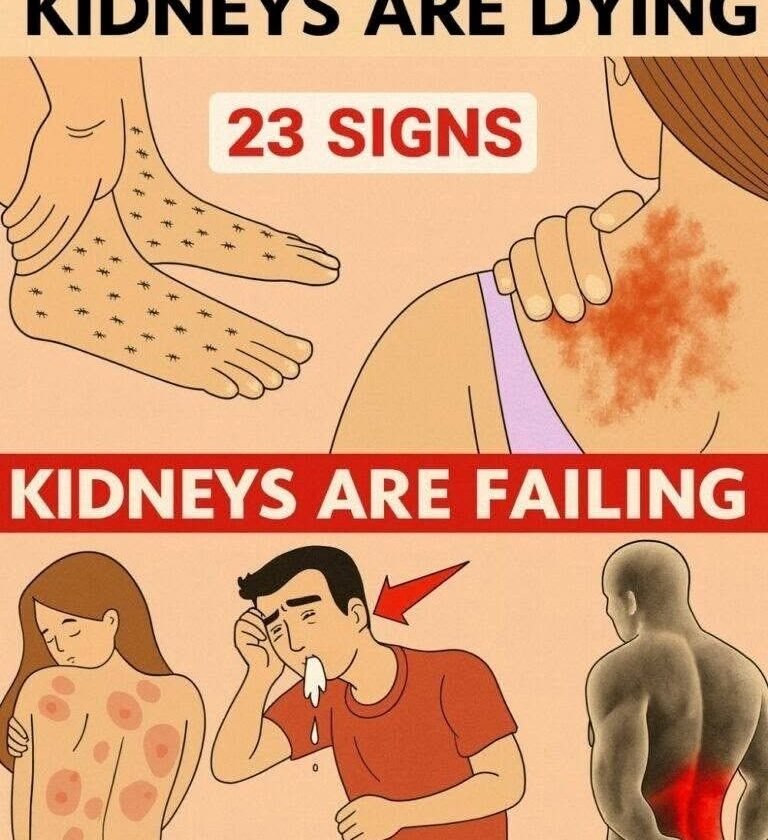
What Viral “23 Signs” Lists Usually Exaggerate
-
Routine lower back pain: Most lower back pain is muscular or spinal. Kidney-related pain is typically felt higher up under the ribs on one or both flanks and usually happens with kidney stones or a kidney infection (often paired with fever or painful urination), not silent chronic kidney disease.
-
Everyday quirks: Cold hands, dry lips, occasional headaches, or dark yellow urine simply from mild dehydration are routinely padded into “23 signs” articles despite having dozens of common non-kidney causes.
How Kidney Health Is Actually Verified
-
Blood test (Serum Creatinine & eGFR): Estimates how well the kidneys filter blood.
-
Urine test (uACR — Urine Albumin-to-Creatinine Ratio): Detects microscopic protein leakage long before symptoms appear.