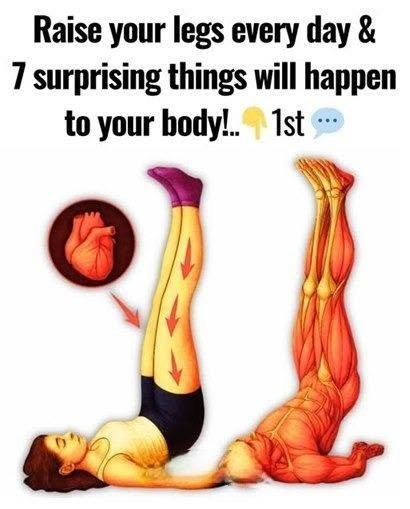
Your paragraph sounds like a social-media teaser for a simple daily practice, probably yoga, stretching, breathing, or meditation. Because the actual practice isn’t named, it would be misleading to claim that it definitely refers to one particular exercise.
Here’s what the teaser is really saying—and what is supported by evidence.
What “one of the most underrated wellness practices” could mean
If the missing practice is a short daily yoga or stretching routine, there is legitimate evidence that regular practice can improve several aspects of health. Yoga commonly combines physical postures, breathing exercises, and meditation. NCCIH
Research has associated yoga with improvements in areas such as:
- Flexibility and mobility: Regular movement through controlled ranges of motion can help maintain or improve physical mobility.
- Balance and strength: Depending on the poses, yoga can challenge the legs, core and stabilizing muscles.
- Stress: A systematic review of 28 studies found that many studies of yoga, meditation, and breathing techniques reported reductions in acute stress responses. PubMed+1
- Blood pressure: A meta-analysis of 49 controlled trials found average reductions of about 5 mmHg systolic and 3.9 mmHg diastolic with yoga interventions. PubMed
- Overall chronic-disease management: A large umbrella review found evidence suggesting benefits for depression, blood pressure, blood glucose and fatigue, although the strength of evidence varies considerably by condition. PubMed+1
The “body changes” claim needs some caution
Viral posts often make the effects sound dramatic—for example, suggesting that one simple exercise will “detox” your body, melt belly fat, reverse aging, fix hormones, or transform your organs.
Those claims shouldn’t be accepted automatically.
A realistic progression from a consistent, gentle yoga/stretching practice might look more like:
First few sessions:
You may notice relaxation, easier movement, or temporary reduction in muscle tension.
After several weeks:
Flexibility, balance, movement confidence and physical conditioning may improve, depending on the routine and how consistently you practice.
Over longer periods:
Regular physical activity can contribute to better cardiovascular and metabolic health. Yoga may also help with stress and, in some circumstances, blood pressure. PubMed+1
But these effects aren’t guaranteed, and “daily” isn’t necessarily better than a sustainable schedule.
What people often get wrong about technique
For an at-home yoga routine, the biggest mistake is usually forcing a pose to achieve a deeper stretch.
A safer approach is:
- Start gently rather than immediately pushing into your maximum range.
- Keep breathing normally rather than holding your breath.
- Move slowly and deliberately.
- Don’t bounce aggressively while stretching.
- Stop if you experience sharp pain, significant numbness, dizziness, or unusual weakness.
- Use modifications rather than trying to copy an advanced pose exactly.
- Learn proper alignment before progressing to difficult positions.
The Cleveland Clinic similarly recommends learning proper alignment and moving slowly through poses when establishing an at-home practice. Cleveland Clinic
How long should you do it?
There isn’t one magic duration.
For someone starting out, 5–10 minutes of gentle movement is a reasonable way to establish the habit. You can gradually increase the duration as your comfort and fitness improve.
And the practice doesn’t necessarily have to be a complete yoga class. It could combine a few gentle stretches, breathing exercises and a short period of meditation. Cleveland Clinic
Bottom line
The teaser has a kernel of truth, but it’s written to create curiosity and encourage people to click the comments. There isn’t enough information in the original wording to know exactly which practice it means, and phrases such as “full list of body changes” and “most people get wrong” are marketing language rather than scientific terminology.
If you paste the first comment or the rest of the post, I can identify the exact exercise/practice and go through every claimed body change one by one—True, Partly True, or False—with the evidence behind each claim.
Sources