9 foot symptoms you shouldn’t ignore
Foot problems are often minor, fever or severe illness. These can represent conditions where delaying treatment risks permanent but certain changes can signal nerve, circulation, infection, joint, or systemic problems. The symptom alone doesn’t establish a diagnosis.
-
A wound that won’t heal — Particularly important in people with diabetes; poor circulation or nerve damage can make foot ulcers difficult to heal.
-
Sudden swelling in one foot or leg — Especially with pain, warmth, or redness. This can require urgent assessment for a blood clot or infection.
-
Cold, pale, blue, or unusually discolored toes — May indicate impaired blood flow and warrants prompt medical evaluation.
-
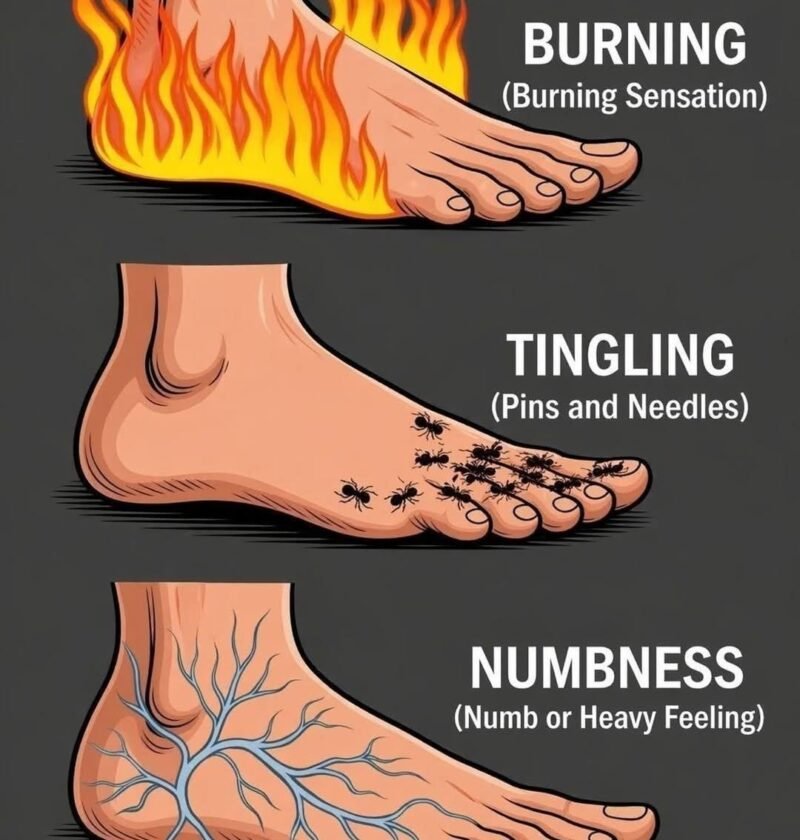
Persistent numbness or tingling — Can occur with peripheral neuropathy, diabetes, nerve compression, vitamin deficiencies, or other conditions.
-
Burning or severe nighttime foot pain — Can be associated with nerve problems and deserves evaluation if persistent.
-
A rapidly spreading red, hot, painful foot — Could indicate a skin or deeper infection.
-
A new sore, blister, or blackened area — Particularly concerning if you have diabetes or reduced circulation.
-
Sudden severe pain with inability to bear weight — Could indicate a fracture, tendon injury, gout, or another acute problem.
-
Major changes in the shape or position of the foot — Progressive deformity, especially with pain or difficulty walking, should be assessed.
🚨 Get urgent help for
A suddenly cold, pale/blue, severely painful foot, rapidly spreading infection, or a foot wound accompanied by fever or severe illness. These can represent conditions where delaying treatment risks permanent damage.
If you have diabetes, take foot wounds and changes in sensation especially seriously. Don’t attempt to cut away a corn, callus, or damaged skin yourself if you have reduced sensation or circulation.
And remember: swollen feet, pain, or numbness don’t automatically mean diabetes or heart disease. A proper examination is needed to determine the cause.