When a viral post or late-night scrolling video flashes the headline, “This is why we get cramps at night,” it usually tries to pin agonizing nocturnal leg cramps on one single culprit—like a lack of bananas, dehydration, or a magnesium deficiency.
While electrolyte imbalances and hydration play a massive role, nocturnal leg cramps are actually a complex neuromuscular puzzle. Let’s strip away the oversimplified viral claims and look at the real physiological triggers behind those sudden, painful middle-of-the-night calf contractions.
What Actually Happens During a Nighttime Cramp?
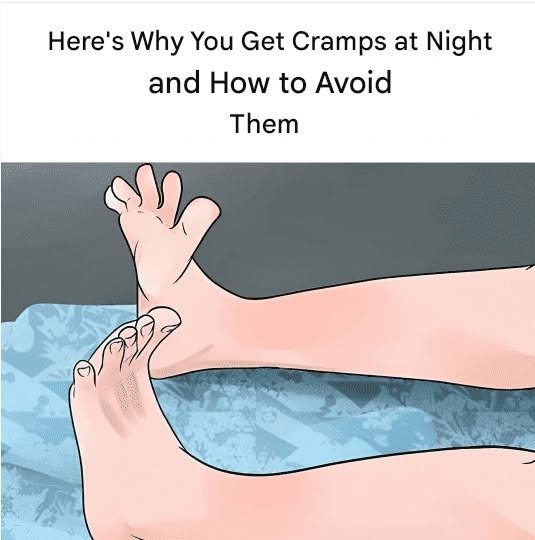
A cramp is not just a tired muscle; it is a painful, involuntary, and sustained hyper-contraction of the skeletal muscle fibers (most commonly the calf muscle or the muscles in the foot).
-
When you are awake, your nervous system constantly coordinates contraction and relaxation signals to your muscles.
-
During a cramp, your motor neurons misfire, sending a rapid, uncontrolled barrage of electrical signals that force the muscle to lock up entirely, refusing to relax.
The Real Triggers Behind Nighttime Cramps
Science points to a few primary physiological reasons why these misfirings happen predominantly at night:
-
Neuromuscular Fatigue and Overuse
-
If you spent the day standing on hard floors, walking long distances, or pushing through an intense workout, your lower leg muscles experience micro-fatigue. As muscles tire, the nervous system control centers that regulate muscle tension become hyperexcitable, making them much more prone to sudden spasms when you finally rest.
-
-
The “Shortened Position” Trap (Bedtime Mechanics)
-
Think about how most people sleep: lying on their side or back with their toes pointed downward (plantarflexion) under heavy bedsheets. This position keeps the calf muscle in a chronically shortened, relaxed state for hours. When you suddenly stretch your leg out or flex your foot against the sheets, a shortened, fatigued muscle is primed to instantly rebel and seize up into a cramp.
-
-
Electrolyte Shifts and Fluid Balance
-
While dehydration alone doesn’t trigger cramps immediately, a depletion or imbalance of key electrolytes—specifically magnesium, potassium, calcium, and sodium—disrupts the electrical gradients across your nerve and muscle membranes. Without enough magnesium or potassium to help muscle fibers relax after contracting, they stay stuck.
-
-
Circulatory Sluggishness
-
When you lie horizontally for hours, circulation slows down compared to when you are upright and moving. Reduced blood flow means a slower clearance of metabolic byproducts and less robust oxygen delivery to resting leg tissues.
-
How to Stop a Cramp Fast (and Prevent It)
-
When a cramp strikes: Do the opposite of what your instinct tells you. Instead of curling away from the pain, gently stretch the muscle in the opposite direction (e.g., if your calf cramps, pull your toes upward toward your shin while keeping your leg straight) to manually force the muscle fibers to lengthen.
-
To prevent them:
-
Gentle evening calf stretches before getting into bed.
-
Ensuring adequate daily hydration combined with mineral-rich foods (leafy greens, nuts, seeds, avocados, and bananas).
-
Checking that your bedsheets aren’t tucked in so tightly that they force your feet into a pointed, cramped position all night.
-