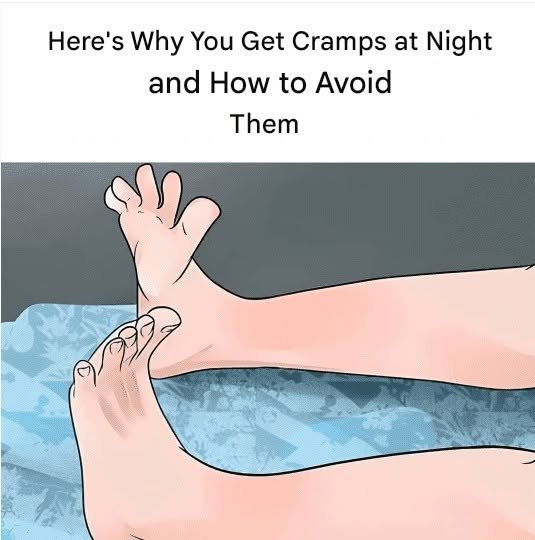
This Is Why We Get Cramps at Night
Have you ever been fast asleep when suddenly your calf or foot tightens into a painful knot? Nighttime muscle cramps are common, especially as we get older, and they can wake you up with intense pain.
The surprising truth is that nighttime cramps aren’t always caused by dehydration or a lack of minerals. They can happen for several reasons, and understanding the cause can help you prevent them.
What causes leg cramps at night?
Muscles and tendons change with age, and tired muscles may be more prone to cramping. Sometimes, no specific cause can be identified.
Not drinking enough fluids, especially after sweating in hot weather, can contribute to muscle cramps. However, dehydration isn’t the explanation for every nighttime cramp.
Low levels of potassium, calcium, or magnesium can contribute in some cases. But taking supplements without knowing whether you need them may not help and can sometimes be harmful.
Unusual exercise, muscle overuse, or prolonged inactivity may play a role.
Some medicines and conditions affecting nerves, circulation, kidneys, or metabolism can be associated with cramps. Frequent episodes deserve medical assessment.
What to do when a cramp strikes
-
Straighten the affected leg.
-
Gently pull your toes toward your shin to stretch the calf.
-
Massage the tight muscle gently.
-
Once the pain eases, stand or walk carefully if you can do so safely.
Gentle calf stretching before bed may also help reduce nighttime cramps.
When to seek help: Speak with a healthcare professional if cramps repeatedly disturb your sleep, last longer than 10 minutes, or occur with numbness or swelling. Sudden one-sided leg swelling, redness, and warmth—especially with persistent pain—need urgent medical evaluation.
One important question
Age
How often do they happen?
Where does the cramp occur?
Get tailored guidance