While clickbait videos often claim that nighttime leg cramps are a deep secret or solved by a single weird kitchen trick, medical science approaches nocturnal leg cramps (charley horses) through a very practical lens.
For most people, nighttime leg cramps are idiopathic—meaning they happen spontaneously without a single underlying disease. However, neurologists and sports medicine specialists point to a combination of nerve, muscle, and positional factors that trigger them:
Why Leg Cramps Happen at Night
-
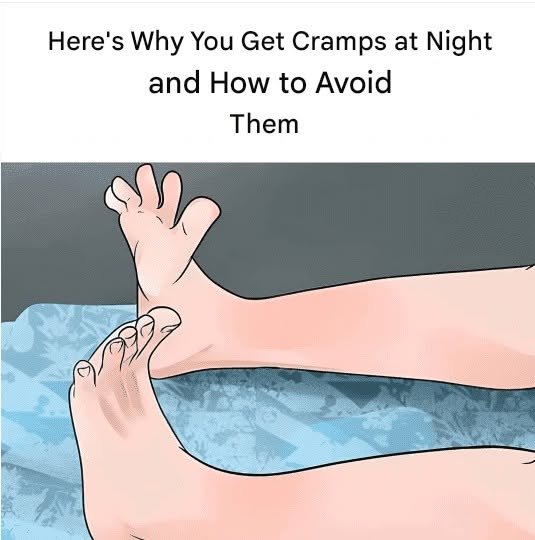
The Sleeping Foot Position (Plantar Flexion): When you lie on your back or side, your feet naturally tend to point downward or stretch out away from your shins. This position keeps your calf muscles in a shortened state for hours. If a muscle is already shortened and then receives a stray electrical impulse, it can easily snap into a violent, involuntary contraction (cramp).
-
Nerve Hyperactivity: Studies suggest that nocturnal cramps originate in the lower motor neurons. Essentially, the nerve endings that control your muscles misfire, sending high-frequency signals that force the muscle fibers to contract intensely all at once.
-
Muscle Fatigue and Dehydration: Overworking a muscle during the day—whether through heavy exercise, long hours of standing, or a sedentary lifestyle that leads to deconditioning—leaves the muscle micro-stressed and prone to spasming when the body relaxes at rest.
-
Medications and Medical Factors: Certain common prescriptions (such as diuretics/water pills, statins, or blood pressure medications) can influence fluid balance or electrolyte processing. Hormonal shifts during pregnancy or underlying issues like poor circulation or electrolyte shifts can also make cramps more frequent.
How to Stop a Cramp Fast
When a cramp wakes you up:
-
Stretch Immediately: Forcefully stretch the cramped muscle by pulling your toes upward toward your shin (dorsiflexion) while straightening your leg.
-
Move Around: Gently walking or shaking out the leg helps reset the neuromuscular reflex and encourages the muscle to relax.
-
Apply Warmth or Ice: A warm shower, bath, or heating pad can loosen the tight muscle tissue.
Prevention Tips
-
Bedding Adjustments: Keep your sheets and blankets loose at the bottom of the bed so they don’t force your feet downward into a pointed position while you sleep.
-
Daily Stretching: Doing light calf and hamstring stretches a few minutes before bed helps lengthen the muscle fibers and reduces nighttime irritability.
-
Hydration: Drink plenty of fluids throughout the day.
Are your nighttime cramps happening frequently enough to disrupt your sleep, or are they just an occasional annoyance?