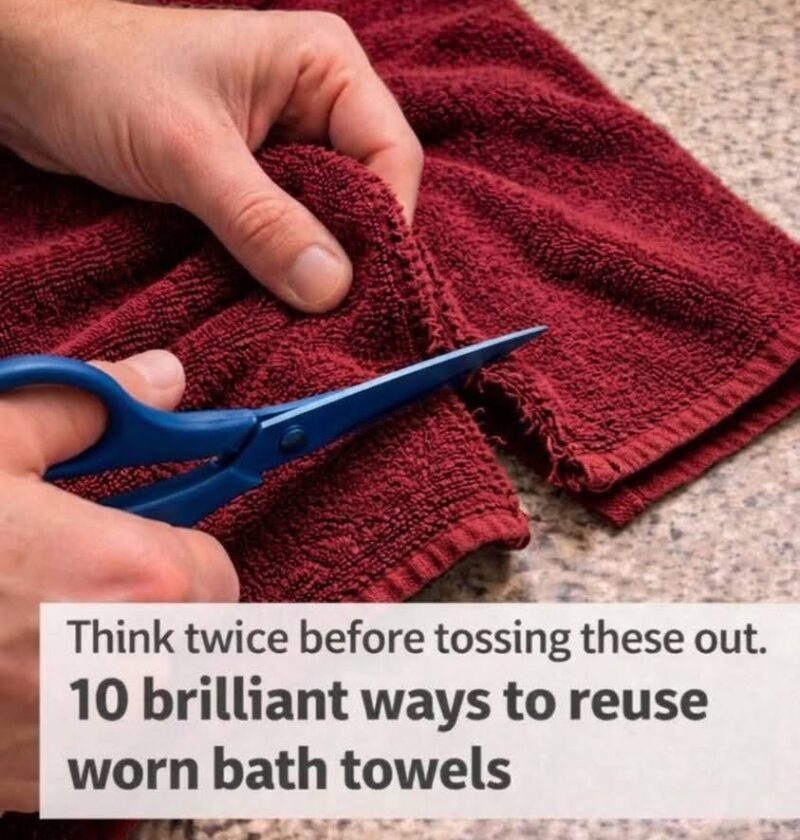
Even when bath towels become too frayed, thin, or threadbare for regular drying duties, their dense, absorbent cotton fibers make them absolute gold for around the house, the garage, and even the garden.
Before tossing worn-out bath towels into the trash, here are 10 brilliant, practical ways to upcycle them into useful household helpers.
1. DIY Reusable Cleaning Cloths & Rags
-
How to do it: Cut old towels into squares or rectangles using sharp fabric scissors. You don’t even need to hem the edges if you use pinking shears, which prevent excessive fraying.
-
Why it’s useful: These heavy-duty terry cloth rags are infinitely better than paper towels for scrubbing countertops, wiping down baseboards, cleaning greasy stove burners, or washing greasy garage tools. Toss them in the washing machine when you’re done, and use them for years.
2. Heavy-Duty Draft Stoppers (Snakes)
-
How to do it: Roll an old bath towel tightly lengthwise into a cylinder. Slide it into a long fabric tube (or sew the edges of a cut towel section together), and stuff the ends.
-
Why it’s useful: Place these “draft snakes” along the bottom of drafty doors or windows during winter to block cold air, save on heating bills, and keep rooms cozy.
3. Quick-Drying Hair Towel Wrap (Turban)
-
How to do it: Cut a tapered, teardrop-shaped hood from the least-worn section of a towel, or simply fold and secure a smaller hand-towel portion with a button and elastic loop.
-
Why it’s useful: Standard bath towels are heavy and pull on wet hair, causing breakage and frizz. Lightweight upcycled towel fabric absorbs moisture quickly without weighing your neck down.
4. DIY Ironing Board Cover Replacement
-
How to do it: Lay your old ironing board down on a flat section of a thick towel, trace its outline leaving a few inches extra, cut it out, and secure it underneath your ironing board with heavy-duty elastic or cord.
-
Why it’s useful: Old towels provide fantastic heat resistance and extra padding underneath your standard ironing cover, creating a smooth, plush pressing surface.
5. Non-Slip Bath Mat or Rug
-
How to do it: Cut old towels into long strips (about 2 inches wide), and braid them tightly together. Stitch or secure the braids into a circular or rectangular rug.
-
Why it’s useful: These braided mats are thick, highly absorbent, machine-washable, and feel wonderfully soft underfoot right outside the shower or kitchen sink.
6. Soothing Heat or Ice Packs
-
How to do it: Cut small squares of towel fabric, fold them in half, and sew three sides to create a pouch. Fill them with dry white rice or flaxseeds before sewing the final edge closed.
-
Why it’s useful: Pop the pouch in the microwave for a minute for a soothing moist-heat pack, or stick it in the freezer for a comfortable cold compress that won’t give you “ice burn” against your skin.
7. Knee Pads for Gardening or DIY Projects
-
How to do it: Cut rectangles out of thick towel sections, fold them over a few times to create thick pads, and stitch the edges. You can add simple elastic straps to make them wearable.
-
Why it’s useful: Kneeling on hard concrete, pavers, or garden soil can be brutal on joints. Upcycled thick terry cloth provides instant, cushioned protection for your knees.
8. DIY Pet Comfort Bedding & Crates
-
How to do it: Layer a couple of old towels inside pet crates, or fold and stitch them together to make a plush, supportive mat for your dog or cat.
-
Why it’s useful: Pets love the familiar scent of home, and old towels are easy to wash frequently when muddy paws or fur accumulate. They also make great donations to local animal shelters!
9. Heavy-Duty Car Wash and Drying Sponges
-
How to do it: Roll up several small towel scraps tightly and sew them into thick, rectangular pads.
-
Why it’s useful: Unlike stiff brushes or abrasive sponges that can swirl clear-coat paint, soft, absorbent terry cloth is gentle on car paint, making it ideal for washing and buffing water spots away without scratching.
10. Plant Root Protectors (Frost Guards)
-
How to do it: Wrap strips of old towels around the base of tender perennial plants or delicate potted shrubs during an unexpected hard freeze.
-
Why it’s useful: The thick cotton fibers trap ambient heat close to the soil and stem, protecting fragile plants from frost damage overnight.