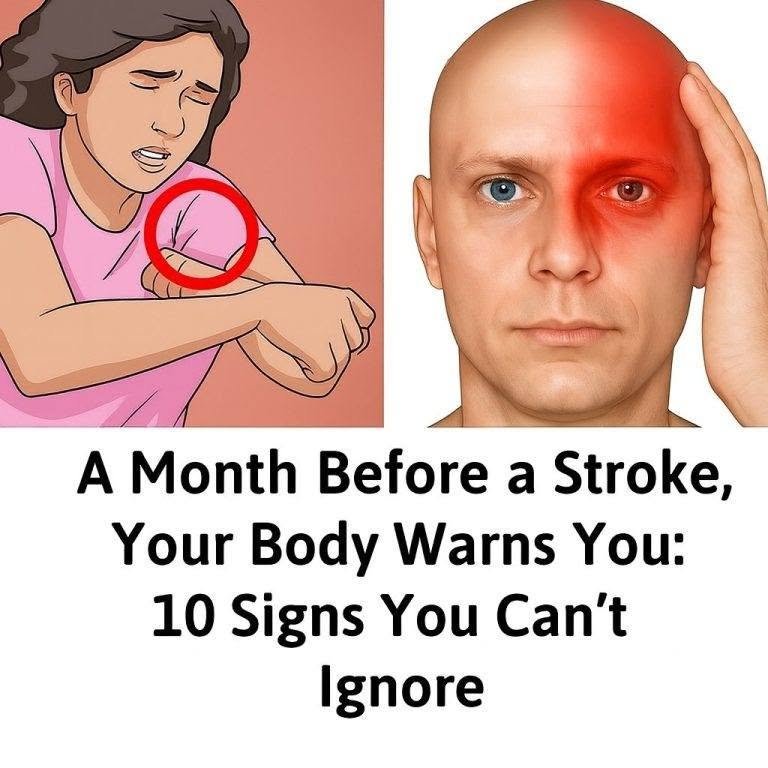
Sensational wellness titles often claim that the body gives a precise, month-long countdown before a stroke occurs. In reality, a stroke is an acute cardiovascular event that typically strikes suddenly.
However, many stroke survivors report experiencing subtle neurological warnings—sometimes days or weeks beforehand—known medically as transient ischemic attacks (TIAs) or “mini-strokes,” along with progressive vascular strain. Recognizing these actual warning signs is crucial for preventing a major stroke.
The Reality of “Mini-Strokes” (TIAs)
A TIA happens when a blood clot temporarily blocks an artery in the brain, cutting off blood flow for a short time before dissolving or dislodging on its own. Because the blockage is temporary, symptoms typically resolve within minutes to hours without causing permanent damage. However, a TIA is a major medical emergency and a critical warning sign: up to one in three people who have a TIA will go on to have a full stroke, with a significant risk of that happening within the first few days or weeks.
Key Warning Signs and Neurological Red Flags
1. Sudden, Brief Weakness or Numbness (Usually One-Sided)
-
What it feels like: A sudden loss of strength or a heavy, numb sensation in the face, arm, or leg, often affecting only one side of the body. You might find it difficult to hold a coffee cup or notice one side of your mouth drooping when you smile.
-
Why it happens: Temporary oxygen deprivation in the area of the brain responsible for motor control and sensory processing on the opposite side of the body.
2. Sudden Trouble Speaking or Understanding Speech
-
What it feels like: Slurred words, difficulty getting words out, or a sudden inability to understand what others are saying in a normal conversation.
-
Why it happens: Disruption of blood flow to the brain’s language centers (such as Broca’s or Wernicke’s areas).
3. Sudden Vision Changes in One or Both Eyes
-
What it feels like: A sudden darkening, blurring, double vision, or temporary loss of sight in one eye (sometimes described as a shade or curtain coming down over your vision).
-
Why it happens: Interrupted blood flow along the optic pathways or the ophthalmic artery.
4. Sudden, Unexplained Dizziness, Loss of Balance, or Coordination
-
What it feels like: A sudden, severe loss of balance, stumbling while walking, unsteadiness, or a spinning sensation (vertigo) combined with other neurological shifts.
-
Why it happens: Impairment of blood flow to the cerebellum or brainstem, which regulates balance and spatial coordination.
5. Sudden, Severe “Thunderclap” Headache
-
What it feels like: A sudden, intensely painful headache that hits with blinding severity out of nowhere, often described as “the worst headache of your life,” with no known history of severe migraines.
-
Why it happens: While less common, this can signal bleeding within the brain (hemorrhagic stroke) or a ruptured aneurysm.
6. Brief Confusion or Trouble Concentrating
-
What it feels like: Sudden, uncharacteristic mental fog, disorientation regarding time and place, or difficulty processing simple thoughts.
-
Why it happens: Transient disruption of cortical blood flow affecting higher cognitive functions.
7. Unexplained Difficulty Swallowing (Dysphagia)
-
What it feels like: A sudden feeling that food or liquid is getting stuck in your throat, or unexpected coughing while swallowing.
-
Why it happens: Mild dysfunction in the cranial nerves controlling the muscles of the throat and mouth.
8. Unaccustomed Fatigue Combined with Weakness
-
What it feels like: An overwhelming wave of physical exhaustion that isn’t resolved by sleep, sometimes accompanied by subtle focal weakness.
-
Why it happens: Ongoing cardiovascular strain as the heart and blood vessels struggle to maintain optimal cerebral perfusion.
9. Sudden Memory Slips or Visual Distortions
-
What it feels like: Brief, unusual lapses in short-term memory or strange visual artifacts (like flashing lights or blind spots) that cannot be explained by standard eye fatigue.
-
Why it happens: Temporary ischemia in areas governing memory retrieval and visual processing.
10. Gradual Onset of Uncontrolled High Blood Pressure
-
What it feels like: While hypertension itself is often silent, chronically escalating blood pressure readings at home are one of the single greatest underlying precursors to both ischemic and hemorrhagic strokes.
-
Why it happens: Stiffening and narrowing of arterial walls force the heart to pump harder, increasing the mechanical stress on delicate blood vessels in the brain.
The FAST Test for Stroke Emergency:If you or someone near you exhibits any of these signs—even if they seem to pass quickly—remember FAST: