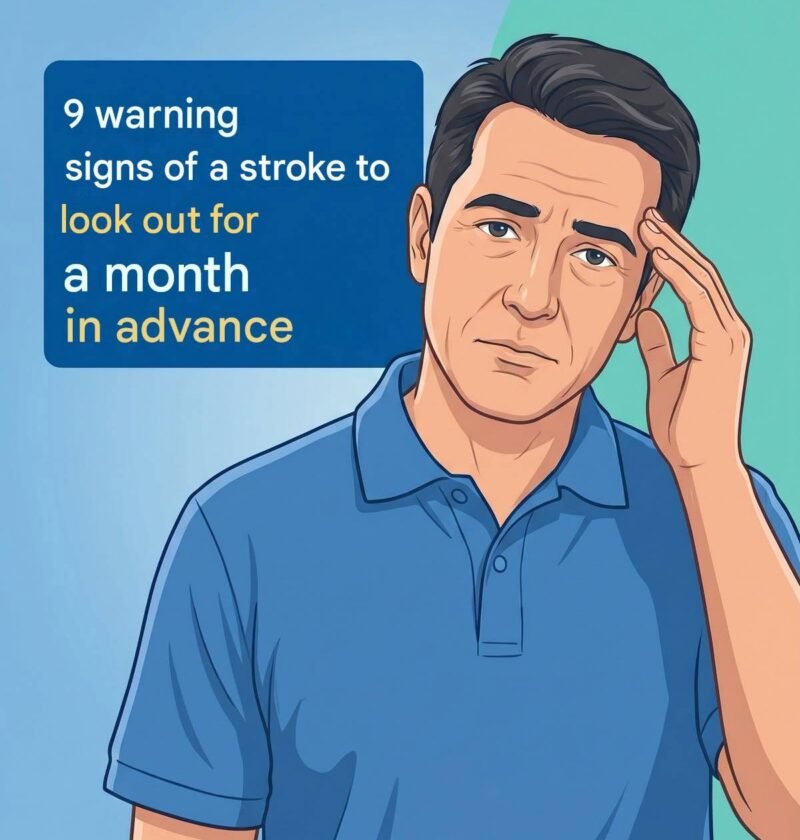
9 “Warning Signs” of a Stroke One Month in Advance — What’s Actually True?
The idea that the body reliably gives nine specific warnings exactly one month before a stroke is misleading. A stroke can happen without warning. However, some people experience a transient ischemic attack (TIA) beforehand, which can produce temporary stroke-like symptoms and is an important warning that requires urgent medical assessment.
9 symptoms you should never ignore
- Sudden weakness or numbness, especially on one side of the body.
- Sudden facial drooping or an uneven smile.
- Sudden difficulty speaking, slurred speech, or trouble understanding others.
- Sudden vision changes, including loss of vision or double vision.
- Sudden dizziness or loss of balance/coordination.
- Sudden difficulty walking or unexplained stumbling.
- Sudden severe headache with no obvious cause, particularly if it is unlike previous headaches.
- Sudden difficulty swallowing or unexplained choking.
- A brief episode of any of these symptoms that completely resolves. This can be a TIA and still requires urgent evaluation.
🚨 Think FAST
F — Face: Does one side droop?
A — Arms: Can both arms be raised normally?
S — Speech: Is speech suddenly unusual or slurred?
T — Time: Call emergency medical services immediately.
Don’t wait for symptoms to disappear. A TIA may last only minutes, but it can signal a substantial risk of a subsequent stroke.
What about symptoms weeks beforehand?
Things such as fatigue, poor sleep, occasional dizziness, headaches, or leg cramps are not reliable ways to predict a stroke a month ahead. They have many possible causes.
If you have had a sudden neurological episode—even if you feel completely normal now—seek urgent medical assessment rather than waiting for another episode.