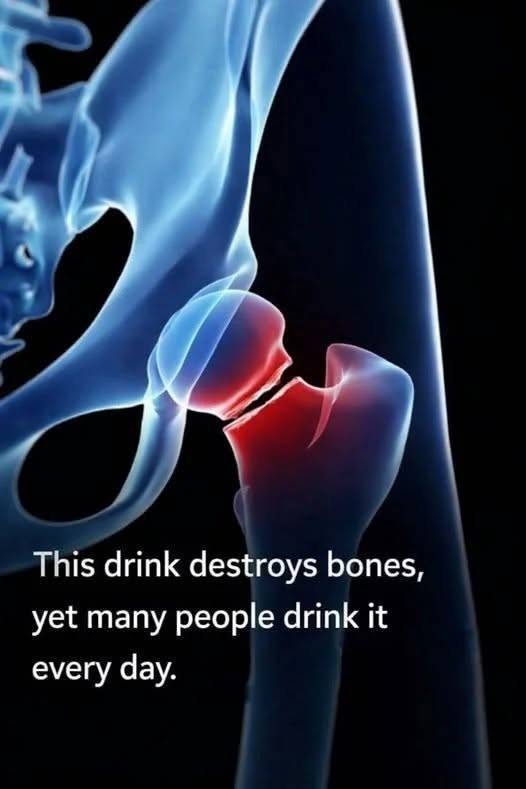
The 5 Drinks Linked to Lower Bone Density—and the Actual Mechanism
-
Dark Cola Sodas (Especially Habitual Daily Intake):
-
Why they’re singled out: Dark colas contain phosphoric acid and caffeine, and frequently replace milk or fortified beverages. Large observational studies have linked daily cola consumption (particularly in women) with lower hip bone mineral density—whereas non-cola carbonated waters do not show the same effect.
-
The nuance: Carbonation (bubbles) itself does not weaken bones; sparkling water is completely bone-safe. The issue is high phosphorus relative to low calcium intake over years.
-
-
Alcohol (Especially Heavy or Binge Drinking):
-
Why it’s singled out: Chronic heavy alcohol intake directly interferes with osteoblasts (the cells that build new bone), disrupts vitamin D activation, alters hormones (estrogen and testosterone) that protect bone mass, and raises fall and fracture risk.
-
The nuance: Moderate or occasional intake carries far lower skeletal impact than regular heavy drinking, while eliminating or cutting back heavy alcohol measurably supports bone rebuilding.
-
-
Excessive Caffeinated Drinks (High-Dose Coffee, Strong Tea, or Energy Drinks):
-
Why they’re singled out: High caffeine intake slightly increases urinary calcium excretion and can modestly reduce intestinal calcium absorption.
-
The nuance: Moderate intake (roughly 1–3 cups of coffee a day, under ~300–400 mg of caffeine) has minimal effect on bones as long as you get adequate calcium—adding a splash of milk or fortified plant milk easily offsets the tiny calcium loss. Problems arise mostly at very high daily caffeine intakes paired with low calcium.
-
-
Sugar-Sweetened Beverages (Sweetened Fruit Drinks, Sweet Teas, Non-Cola Sodas):
-
Why they’re singled out: High added sugar spikes insulin and promotes low-grade inflammation, which can subtly disrupt calcium balance and bone-building signaling—while displacing nutrient-dense beverages in adolescents and older adults alike.
-
The nuance: Whole fruit provides fiber and potassium that support bone health; it is concentrated liquid added sugars consumed daily that correlate with poorer bone metrics.
-
-
High-Sodium Drinks (Salty Packaged Broths, Tomato/Vegetable Juices, Some Electrolyte Mixes):
-
Why they’re singled out: Kidneys excrete excess sodium alongside calcium—roughly every extra 2,300 mg of sodium increases urinary calcium loss.
-
The nuance: Plain electrolyte drinks after heavy sweating are fine, but relying daily on very salty canned broths or high-sodium juices while eating a low-calcium diet gradually drains calcium reserves.
-
What Actually Protects Your Bones Daily
-
Prioritize calcium and vitamin D: Adults generally need 1,000–1,200 mg of calcium daily (from dairy, fortified soy/almond milk, leafy greens, or calcium-set tofu) plus adequate vitamin D so your gut can actually absorb that calcium.
-
Swap smartly without extreme rules: Keep sparkling water, herbal tea, and moderate coffee/tea with milk on the menu, while keeping colas, energy drinks, sugary beverages, and alcohol occasional.
-
Pair nutrition with weight-bearing movement: Walking, stair climbing, and resistance/strength training signal bone cells to stay dense far more powerfully than avoiding any single beverage.
When to see a doctor: Talk to your doctor about a bone density scan (DEXA) and vitamin D check if you are a woman 65 or older (or younger with fracture risk factors), a man 70 or older, have had a fracture from a minor fall, have lost noticeable height, or have taken long-term steroid medications (like prednisone).