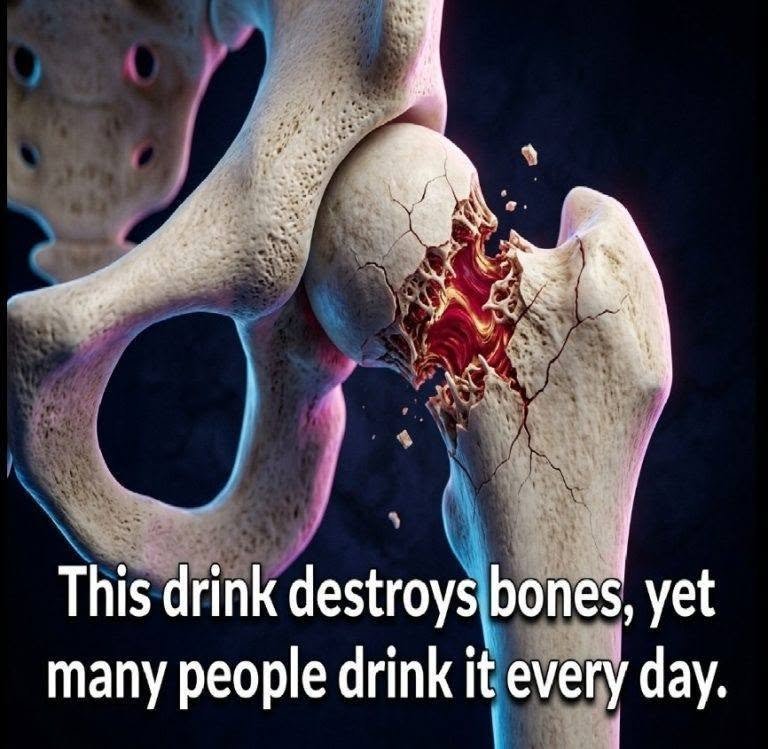
5 Drinks to Limit If You’re Concerned About Bone Health
The phrase “most harmful” is a little misleading. No ordinary beverage automatically “destroys” your bones, and the evidence varies considerably between drinks. The bigger issue is frequent or excessive consumption—especially when these beverages replace calcium- and nutrient-rich choices.
1. 🥃 Heavy alcohol consumption
This has the clearest concern. Heavy drinking can contribute to bone loss and increase fracture risk.
2. 🥤 Cola and other soft drinks
Some studies have associated cola consumption with lower bone mineral density, although the evidence isn’t definitive. Importantly, the carbonation itself isn’t considered harmful to bones. Caffeine, phosphoric acid, dietary patterns, and replacing nutritious beverages may all play a role.
3. ☕ Excessive coffee
Caffeine can slightly reduce calcium absorption. The Bone Health & Osteoporosis Foundation notes that more than about three cups of coffee a day may interfere with calcium absorption and bone health.
That doesn’t mean you need to give up your morning coffee. Getting enough calcium can help offset the small effect of caffeine.
4. ⚡ Highly caffeinated energy drinks
Large amounts of caffeine can contribute to excessive caffeine intake, while many energy drinks also contain substantial added sugar. They’re best consumed sparingly, particularly if they’re replacing nutritious beverages.
5. 🧋 Sugary beverages
Regularly drinking sugar-sweetened beverages can contribute to an overall diet that’s less supportive of healthy bones, particularly when they displace milk or calcium-fortified alternatives. Recent evidence links higher consumption of sugar-sweetened beverages with several adverse bone/joint outcomes, although this doesn’t prove that the drinks directly cause osteoporosis.
🥛 What should you drink instead?
Water is an excellent everyday choice. Milk and calcium-fortified alternatives can also help you meet calcium requirements.
For adults 50 and older, the Bone Health & Osteoporosis Foundation recommends 1,200 mg of calcium daily, along with adequate vitamin D.