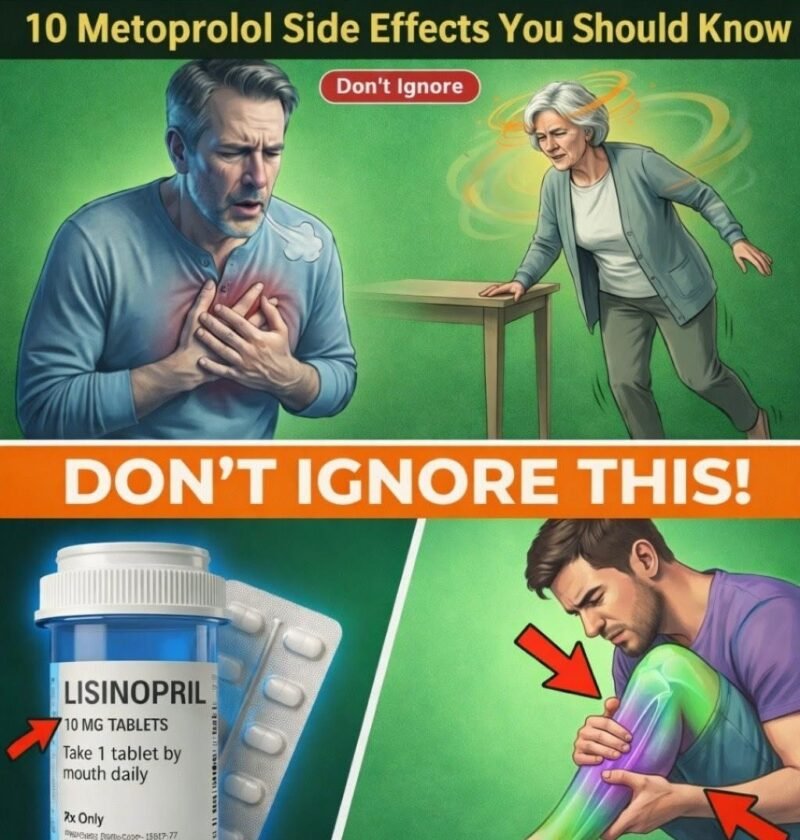
If you’re referring to the sensational headline about metoprolol, the medication does have potential side effects, but the claim that doctors are “praying you don’t discover” them is misleading. Metoprolol is a commonly used beta-blocker for high blood pressure, angina, certain abnormal heart rhythms and other heart conditions.
10 possible metoprolol side effects
- Tiredness or weakness — particularly when starting treatment or after a dose increase.
- Dizziness or lightheadedness — metoprolol can lower blood pressure and slow the heart rate.
- Slow heartbeat (bradycardia) — an excessive slowing can cause weakness, dizziness or fainting.
- Cold hands and feet — reduced circulation to the extremities can occur.
- Nausea or stomach discomfort — gastrointestinal symptoms can occur.
- Sleep problems or vivid dreams — these are reported with beta-blockers, including metoprolol.
- Shortness of breath or wheezing — this can be particularly important in people with asthma or other bronchospastic conditions.
- Depressed mood or other nervous-system effects — depression, confusion and sleepiness have been reported.
- Sexual difficulties — decreased libido or erectile difficulties have been reported, although these aren’t common and a direct cause isn’t always certain.
- Low blood pressure or fainting — especially if the dose is too strong or metoprolol is combined with other medicines that lower blood pressure.
⚠️ The most important warning
Don’t stop metoprolol suddenly on your own. Abrupt withdrawal of a beta-blocker can worsen angina and, in some people with heart disease, increase the risk of serious cardiac events. Dose reductions should be done under medical supervision.
Seek urgent medical attention for new or severe chest pain, significant difficulty breathing/wheezing, fainting, or severe swelling/shortness of breath.