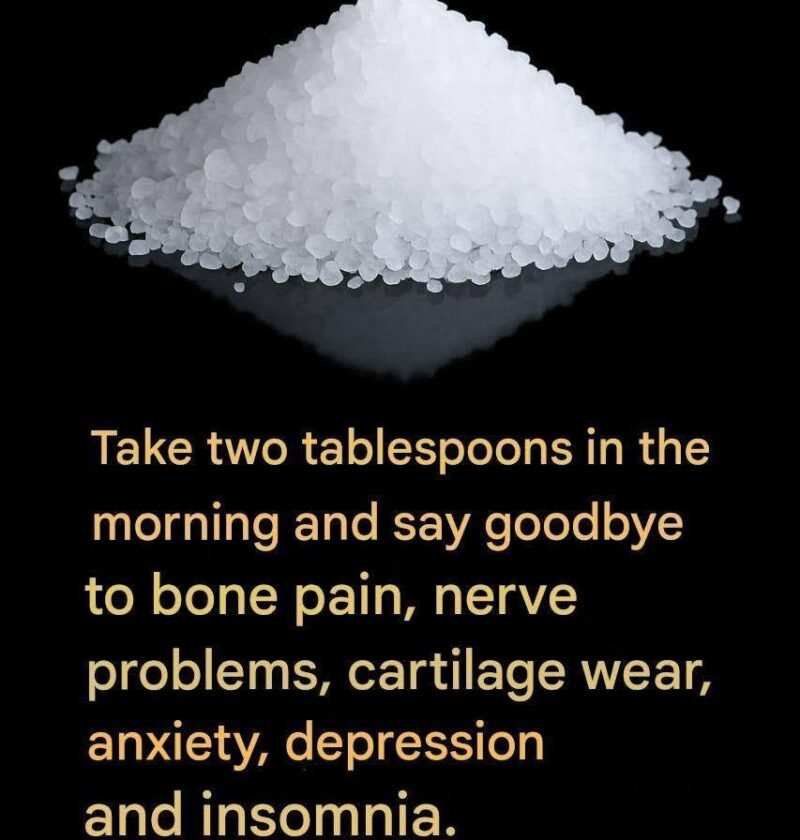
“Take two tablespoons in the morning and say goodbye to bone pain, nerve problems, cartilage wear, anxiety, depression and insomnia”
This is classic miracle-cure clickbait. The claim that one substance can simultaneously eliminate bone pain, nerve problems, cartilage damage, anxiety, depression, and insomnia isn’t supported by good clinical evidence.
The version of this headline circulating online appears to be referring to magnesium. (Opinion View)
🧂 What magnesium actually does
Magnesium is an essential mineral involved in normal muscle, nerve, and bone function. Getting enough magnesium is important, but that doesn’t mean taking extra magnesium will cure multiple unrelated conditions. NIH specifically cautions that supplements generally shouldn’t be expected to reverse chronic diseases. (News in Health)
- Bone health: Magnesium contributes to normal bone function, but persistent bone pain needs an evaluation for its underlying cause.
- Nerve symptoms: Magnesium deficiency can affect neuromuscular function, but unexplained burning, numbness, or nerve pain can have many causes. (NIH Neurological Institute)
- Cartilage wear/arthritis: There is no evidence that two tablespoons of magnesium can rebuild worn cartilage.
- Anxiety/depression: Research on nutritional supplements for these conditions is mixed and doesn’t establish magnesium as a cure. (PubMed)
- Insomnia: Magnesium isn’t an established cure for chronic insomnia; evidence for supplements is limited, and proven treatments such as cognitive behavioral therapy for insomnia (CBT-I) are preferred. (NCCIH)
⚠️ Don’t take “two tablespoons” without knowing what it contains
Two tablespoons is a volume, not a safe magnesium dose. Different magnesium products contain very different amounts of elemental magnesium, and excessive supplemental magnesium can cause diarrhea and, at very high amounts, more serious toxicity—particularly in people with impaired kidney function.
Also, magnesium can interfere with absorption of some medicines. NIH recommends discussing supplements with a healthcare professional when you’re taking medications or have health conditions. (News in Health)
Bottom line: If the article is promoting a two-tablespoon magnesium mixture as a cure for all these problems, don’t treat the headline as medical advice. Magnesium is an important nutrient, but it isn’t a universal treatment for pain, damaged cartilage, depression, anxiety, and insomnia.