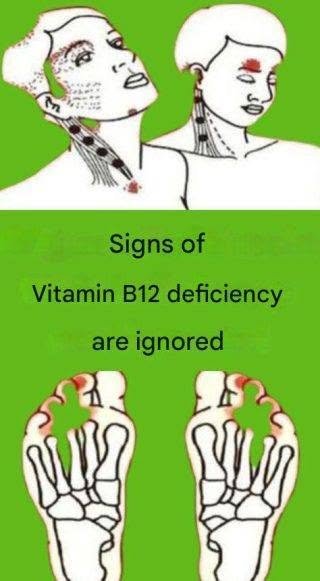
⚠️ Signs of Vitamin B12 Deficiency That Are Often Overlooked
Vitamin B12 deficiency can develop gradually, and some symptoms are easy to mistake for normal aging, stress, or simply being tired. If several of these symptoms persist, it’s worth discussing them with a healthcare professional.
Persistent fatigue or weakness — B12 deficiency can cause anemia, reducing oxygen delivery to tissues.
Numbness or tingling 🖐️ — Nerve involvement can cause “pins and needles,” particularly in the hands and feet.
Balance or walking problems — Nerve damage can affect coordination and stability.
Memory or concentration difficulties 🧠 — Some people experience cognitive changes or confusion.
Pale or yellowish skin — Certain types of B12-related anemia can alter skin color.
A sore, smooth, or unusually red tongue — This can occur with B12 deficiency and other nutritional problems.
Mouth ulcers or a sore mouth — Oral changes can sometimes accompany deficiency.
Vision problems — Rarely, prolonged deficiency can affect the optic nerve.
Mood changes — Depression, irritability, or other psychological symptoms can occur.
Shortness of breath or a racing heartbeat — These can occur when deficiency causes significant anemia.
Who is more likely to develop B12 deficiency?
Risk is higher in people with poor absorption, certain gastrointestinal conditions or surgeries, pernicious anemia, or diets containing little or no animal-derived B12. Long-term use of some medications, including metformin and certain acid-reducing medicines, can also contribute.
🩺 Why early diagnosis matters
B12 deficiency can cause neurological damage, and some nerve problems may become permanent if treatment is delayed. Don’t rely on symptoms alone—a blood test can help determine whether you actually have a deficiency and identify the cause.
Avoid taking very high-dose B12 supplements simply because you have fatigue or tingling. The appropriate treatment depends on the severity and underlying cause.
Bottom line: Unexplained fatigue, tingling, balance problems, or cognitive changes shouldn’t automatically be attributed to aging. If they’re persistent or occurring together, ask a healthcare professional about B12 testing and other possible causes.