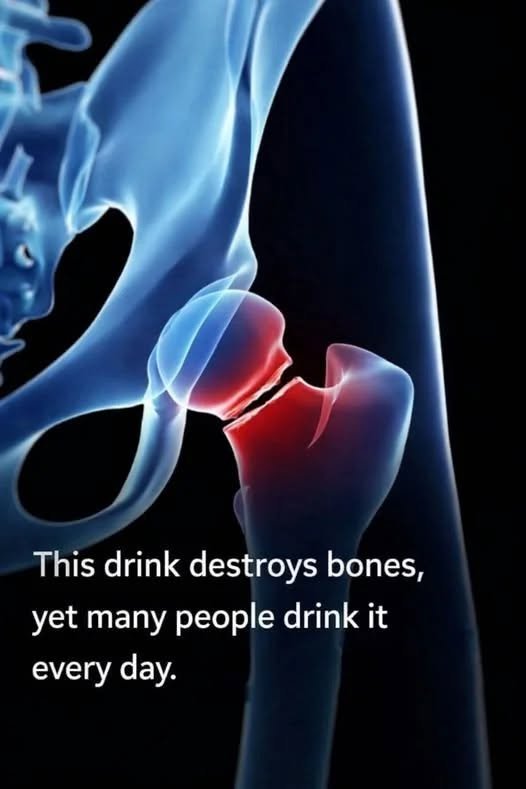
If you’re referring to the viral claim about “five drinks that damage your bones,” it’s more nuanced than the headline suggests. No single beverage automatically causes weak bones, but some drinks can contribute to poor bone health when consumed frequently or in large amounts.
5 drinks worth limiting
- Alcohol 🍺
Heavy or chronic alcohol consumption is associated with reduced bone formation, increased fracture risk, and a greater risk of falls. - Sugar-sweetened soft drinks 🥤
The concern isn’t that carbonation “dissolves bones.” Rather, frequent consumption can displace nutrient-rich beverages or foods and contribute to a diet that’s low in calcium and other nutrients. Some cola beverages also contain caffeine and phosphoric acid, but moderate consumption hasn’t been shown to simply “leach calcium from bones.” - Energy drinks ⚡
These can contain substantial amounts of caffeine and added sugar. Excessive caffeine may modestly interfere with calcium balance, particularly when calcium intake is inadequate. - Very high amounts of caffeinated drinks ☕
Moderate coffee or tea consumption is generally compatible with healthy bones. The concern is excessive caffeine, especially in someone who doesn’t consume enough calcium. - Highly sugary drinks and sweetened beverages 🧃
Frequent consumption can contribute to excess calories and poor overall nutrition, which isn’t favorable for maintaining healthy bones.
What actually protects your bones?
Focus on getting adequate calcium, vitamin D, protein, and other nutrients, while doing regular weight-bearing and resistance exercise. Avoid smoking and keep alcohol consumption low.
If you’re at increased risk of osteoporosis—particularly after You don’t necessarily need to eliminate coffee, tea, or carbonated drinks. Overall dietary pattern, calcium/vitamin D status, exercise, smoking, alcohol intake, and age-related factors are much more important than a simplistic menopause, at older age, or with certain medications or medical conditions—ask your healthcare professional whether you need a bone-density (DXA) test.
Bottom line: You don’t necessarily need to eliminate coffee, tea, or carbonated drinks. Overall dietary pattern, calcium/vitamin D status, exercise, smoking, alcohol intake, and age-related factors are much more important than a simplistic list of “bone-damaging drinks.”