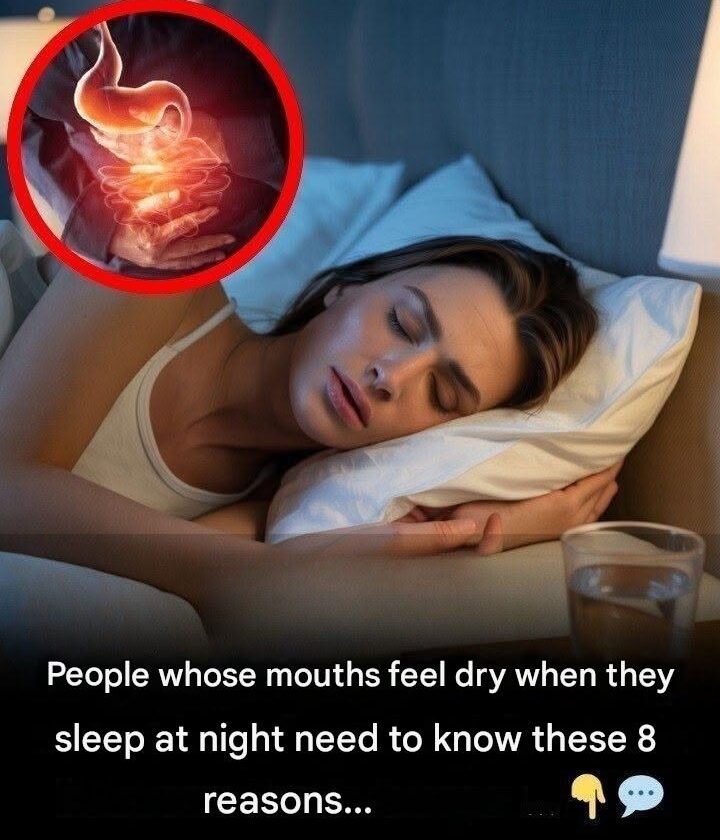
Dry Mouth at Night: 8 Possible Reasons
Waking up with a dry mouth is common and doesn’t necessarily mean something is seriously wrong. It happens when saliva production decreases or you breathe through your mouth while sleeping.
8 common causes
-
Mouth breathing — A blocked nose, allergies, congestion, or sleeping with your mouth open can dry the mouth.
-
Dehydration — Not getting enough fluids during the day can contribute, although drinking excessive amounts right before bed isn’t necessary.
-
Snoring or sleep apnea — Mouth breathing during sleep can produce significant morning dryness. Loud snoring, witnessed pauses in breathing, or daytime sleepiness warrant medical assessment.
-
Medications — Hundreds of medications can reduce saliva, including some antihistamines, antidepressants, blood-pressure medicines, and decongestants.
-
Alcohol or tobacco — Both can contribute to dry mouth.
-
Caffeine — Large amounts, particularly later in the day, may worsen dryness for some people.
-
Dry bedroom air — Heating or air conditioning can make overnight mouth and throat dryness more noticeable.
-
Medical conditions — Diabetes and some autoimmune disorders, including Sjögren’s disease, can cause persistent dry mouth.
Why persistent dry mouth matters
Saliva protects your teeth and mouth. Long-term dry mouth can increase the risk of tooth decay, gum problems, mouth irritation, difficulty swallowing, and oral infections.
What may help
-
Drink adequate fluids during the day.
-
Address nasal congestion or allergies with appropriate treatment.
-
Avoid tobacco and limit alcohol.
-
Consider a humidifier if your bedroom air is very dry.
-
Chew sugar-free gum or use sugar-free lozenges to stimulate saliva during the day.
-
Maintain careful dental hygiene and regular dental checkups.
If dry mouth is persistent, severe, accompanied by excessive thirst/frequent urination, difficulty swallowing, mouth sores, or significant dental problems, discuss it with a healthcare professional or dentist.
And if you snore loudly, gasp or choke during sleep, or someone notices pauses in your breathing, ask a clinician about possible sleep apnea.