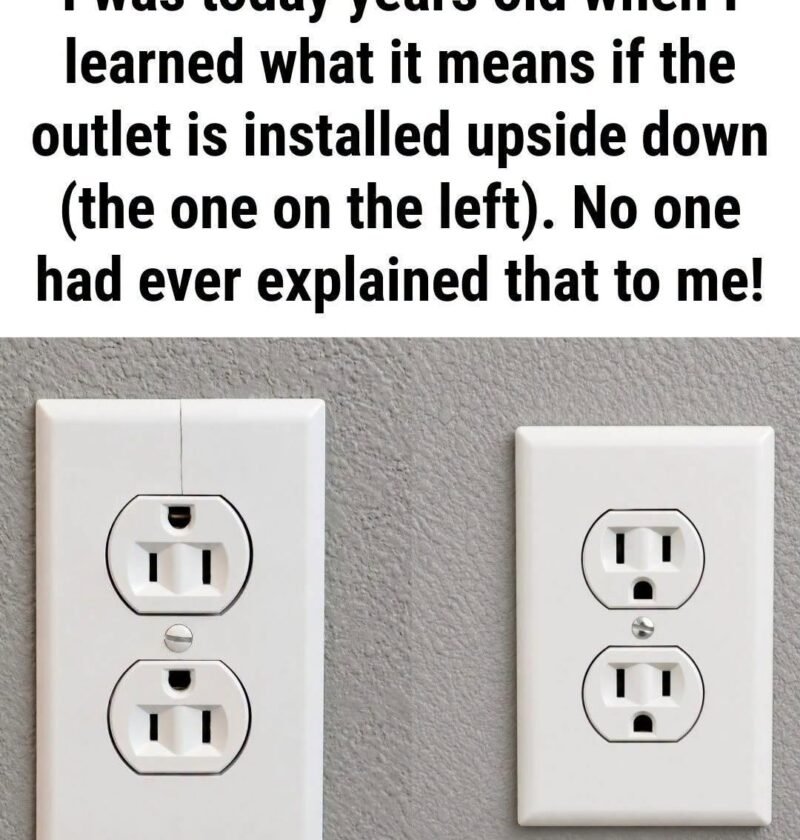
That “upside-down outlet” is actually a ground-up electrical receptacle, and there’s a legitimate safety reason some electricians choose it.
Why would the ground be on top?
With a normal three-prong outlet, the round/U-shaped grounding slot is usually at the bottom. When it’s at the top, the grounding pin can act as a kind of protective barrier.
If a plug is partially pulled out and a metal object falls against the exposed prongs, the object may contact the grounding pin rather than simultaneously bridging the hot and neutral blades. That can reduce the chance of a dangerous short or arc. Some manufacturers specifically recommend ground-up installation for this reason.
H
Hubbell
+1
But is ground-up actually required?
No—not generally in the U.S. The National Electrical Code does not prescribe a particular orientation for standard receptacles. NEMA likewise says the choice can depend on functionality, local convention, and the type of plug being used.
N
NEMA Wiring Devices
Ground-down remains extremely common in homes, while ground-up may be chosen in certain commercial, industrial, or healthcare settings.
One important catch
Ground-up isn’t automatically safer for every plug. Some appliances have right-angle plugs designed for the cord to exit downward. Turning the receptacle around can put unnecessary stress on the cord or plug.
S
SlashGear
So the surprising truth is:
There isn’t a universal “right-side up” for an electrical outlet. The upside-down-looking version can be an intentional safety choice—not an electrician’s mistake. The most important thing is that the receptacle is properly wired, grounded, installed, and compliant with applicable local requirements.
S
studylib.net
H
N
S
Sources