How to Pick a Sweet, Ripe Watermelon 🍉
There’s no foolproof visual test for sweetness, but these clues can greatly improve your chances of choosing a good one:
- Look for a large creamy-yellow field spot — this is where the melon rested on the ground. A deep yellow or orange-yellow spot generally suggests it spent more time ripening.
- Choose a dull, matte rind — a very shiny rind can indicate the melon isn’t fully mature.
- Check the shape — look for a symmetrical, evenly developed melon without major dents or irregular bulges.
- Pick it up — it should feel heavy for its size, suggesting plenty of water and a juicy interior.
- Look for brown webbing — some rough, web-like markings can occur during pollination and fruit development.
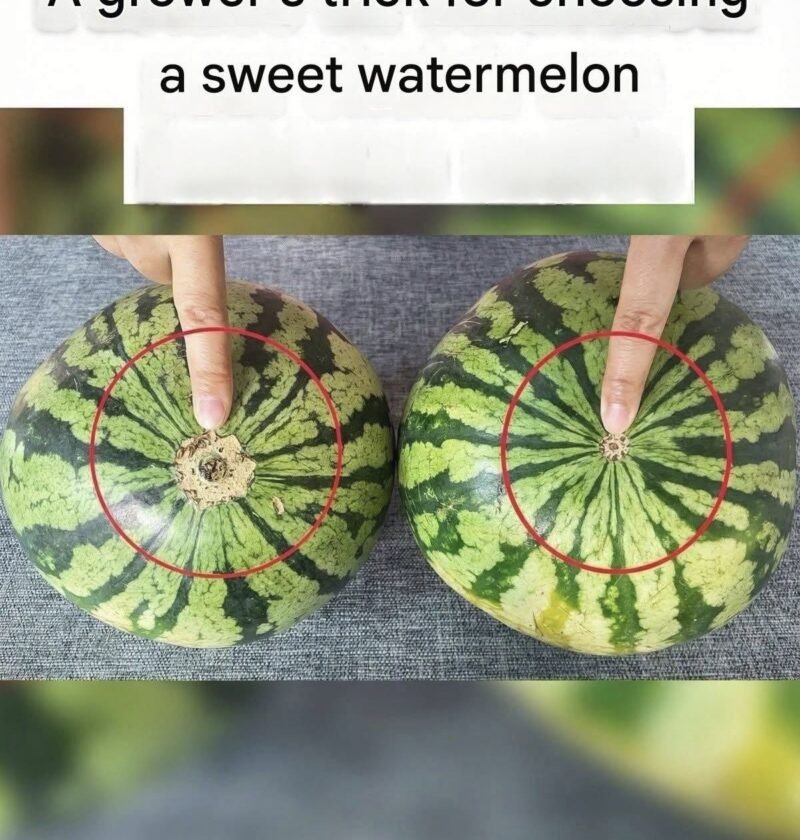
- Check the stem when available — a dry, brownish stem is generally preferable to a fresh green one.
- Don’t depend entirely on tapping — a deep, resonant sound can be a clue, but this method is subjective.
- Avoid bruises and soft spots — particularly areas that look damaged, wet, or sunken.
- Don’t assume the biggest melon is the sweetest — size alone doesn’t determine sweetness.
- Compare several melons — choose the one that combines a strong field spot, good weight, symmetry, and an intact rind.
🍉 The quick market test
Heavy for its size + large creamy-yellow field spot + dull rind + symmetrical shape = a good bet.
And one myth to forget: there’s no reliable way to guarantee sweetness from the outside alone. Variety and growing conditions also have a major influence.