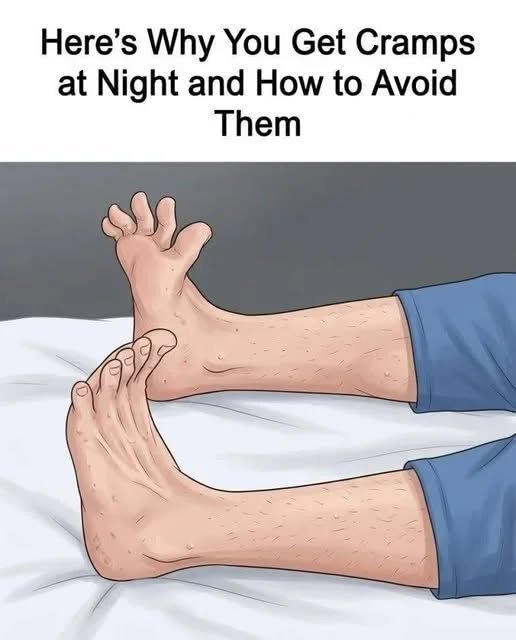
…clickbait health headlines love to promise a “miracle cure” or a weird bedroom trick that will permanently banish nighttime leg cramps in ten seconds flat.
As we touched on earlier, while a sudden “charley horse” can jolt you awake in agony, nocturnal leg cramps are typically your muscles reacting to a mix of mechanical strain, neural signaling quirks, or shifts in your body’s internal balance. Because you’ve already explored the foundational reasons behind these spasms, let’s look closer at the 7 most common root causes and the most effective, natural ways to stop them in their tracks.
The 7 Common Causes of Nighttime Leg Cramps
-
Electrolyte Depletion (Magnesium, Potassium, Calcium): Your muscle fibers need a constant, delicate interplay of minerals to fire and relax. When levels dip—especially magnesium or potassium—your nerves misfire, causing the muscle to lock up.
-
Prolonged Muscle Fatigue and Strain: Standing on hard floors all day, heavy unaccustomed exercise, or sitting with poor posture forces your calf and foot muscles into prolonged contraction, leaving them hyper-irritable by bedtime.
-
Dehydration and Reduced Blood Volume: Inadequate fluid intake during the day reduces overall blood volume, leaving muscle tissues parched and far more prone to seizing up during hours of stillness.
-
Poor Circulatory Efficiency: Sluggish venous return or restricted blood flow limits the oxygen and nutrient supply to your lower extremities, triggering nighttime spasms.
-
Nerve Compression (Sciatica or Spinal Strain): Mild impingement or irritation of the nerves running from your lower back down your legs can misinterpret resting positions as stress signals, firing off erratic muscle contractions.
-
Sedentary Lifestyle and Lack of Stretching: Spending hours sitting still without stretching keeps calf muscles short and tight, making them snap into cramps the moment you shift your position in bed.
-
Medication Side Effects: Common prescriptions—particularly certain diuretics (“water pills”) for blood pressure or statins for cholesterol—can alter electrolyte balances or cause muscle aches as a metabolic byproduct.
How to Stop Them Naturally (And Prevent Them)
-
The Instant Stretch (When a Cramp Hits): If a cramp strikes, immediately flex your foot upward (pulling your toes toward your shin) and straighten your leg, or gently massage the knotted muscle to help the fibers release.
-
Dial In Your Mineral Intake: Boost magnesium-rich whole foods like pumpkin seeds, almonds, leafy greens, and avocados, or discuss a high-absorption magnesium glycinate supplement with your physician.
-
Establish a Bedtime Stretch Routine: Spend three minutes before bed doing gentle calf stretches against the wall to lengthen tight muscle fibers before sleep.
-
Hydrated Consistency: Keep a glass of water by your bed and sip steadily throughout the day rather than downing a liter right before sleep.