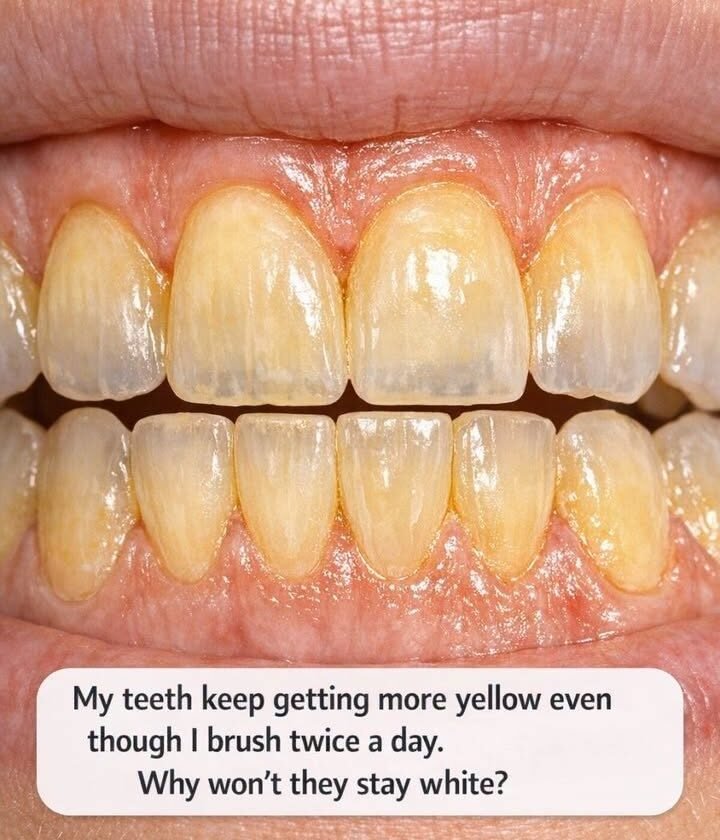
Brushing twice a day is excellent for oral health, but it doesn’t guarantee naturally white teeth. Tooth color is influenced by the enamel, the dentin underneath it, age, and staining.
Why your teeth may be getting yellower
-
Natural aging: Enamel gradually becomes thinner, allowing the naturally yellowish dentin underneath to show through.
-
Coffee, tea, cola, or tobacco: Pigments can accumulate on the enamel over time.
-
Plaque and tartar: Hardened tartar can look yellow or brown and can’t be removed effectively with a toothbrush alone.
-
Enamel erosion: Acidic foods, drinks, or reflux can wear down enamel and make the underlying dentin more visible.
-
Dry mouth: Reduced saliva means less natural cleansing and can increase plaque buildup.
-
Certain medications or childhood exposures: Some can cause intrinsic tooth discoloration.
-
Brushing technique: Brushing too aggressively won’t make teeth whiter and can contribute to enamel or gum damage.
What you can do
Use a fluoride toothpaste, brush gently for about two minutes twice daily, and clean between your teeth every day. Limit frequent exposure to strongly staining or acidic drinks, and consider rinsing with water afterward.
If you have visible hardened deposits, a professional dental cleaning may make a noticeable difference. Whitening treatments can lighten natural tooth color, but they won’t remove tartar or treat underlying dental disease.
See a dentist if…
The color change is rapid, affects only one tooth, comes with pain, sensitivity, bleeding gums, or bad breath, or doesn’t improve with routine cleaning.
And don’t try to whiten teeth with lemon juice, vinegar, baking soda mixtures, or abrasive powders—they can damage enamel.
Bottom line: Yellowing doesn’t necessarily mean you’re doing anything wrong. Healthy teeth aren’t naturally paper-white, and some yellowing with age is completely normal.