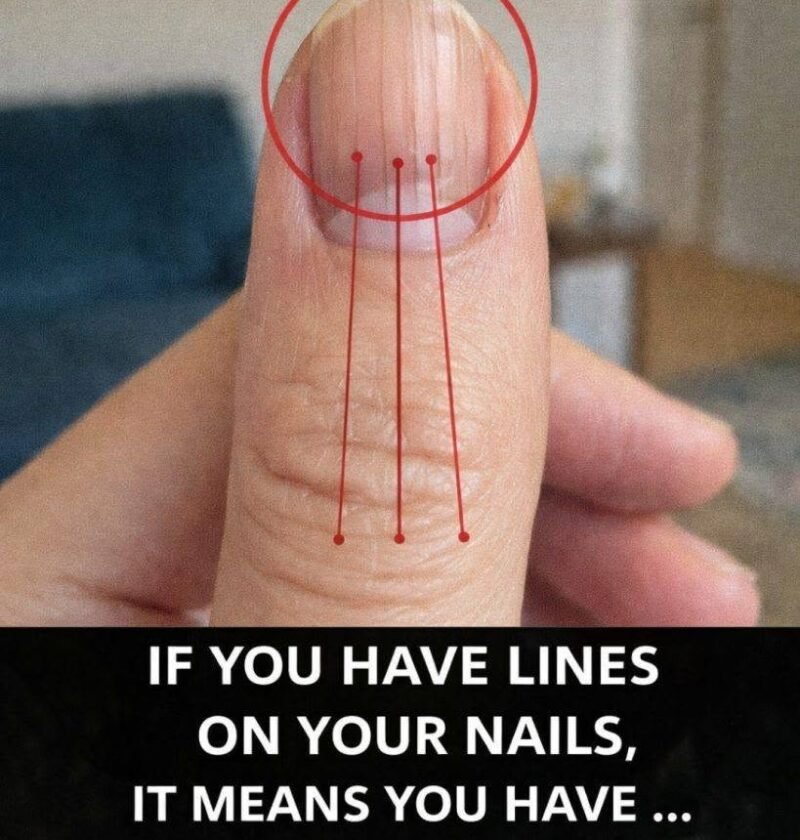
The headline “Lines on Your Fingernails: What They Might Reveal About Your Health” is partly true, but nail lines are not a diagnostic test. Many are completely harmless, especially vertical ridges that become more noticeable with age. (Mayo Clinic)
What different nail lines can mean
- Vertical ridges — Lines running from the cuticle toward the fingertip are common and often become more prominent with aging. Usually, they aren’t concerning. (Mayo Clinic)
- Horizontal grooves (Beau’s lines) — Deep lines running across the nail can occur when nail growth temporarily slows or stops. Possible triggers include a significant illness or fever, injury, poorly controlled diabetes, some medications, and chemotherapy. (American Academy of Dermatology)
- White lines or spots — These are often caused by minor injury to the nail and generally grow out as the nail grows. (Mayo Clinic)
- Dark streaks — A new or changing dark streak under a nail should be examined by a dermatologist because, although many causes are harmless, it can occasionally be a sign of melanoma. (American Academy of Dermatology)
- Red or brown splinter-like lines — These can result from trauma, but unexplained splinter hemorrhages can sometimes occur with underlying conditions and deserve evaluation, particularly if accompanied by other symptoms. (American Academy of Dermatology)
Other nail changes worth noticing
Nails that become spoon-shaped, severely curved/clubbed, yellow, detached from the nail bed, or develop pits can sometimes be associated with conditions such as iron deficiency, psoriasis, infection, thyroid disease, or heart/lung problems. (American Academy of Dermatology)
Bottom line: Don’t panic over ordinary vertical ridges. But if you develop a new horizontal groove, unexplained dark streak, major color change, nail separation, or rapidly changing nail appearance, have it assessed rather than trying to diagnose the cause from the nail alone.