Just a Teaspoon, and Suddenly the Orchid Blooms With Lots of Flowers? Here’s What Actually Works
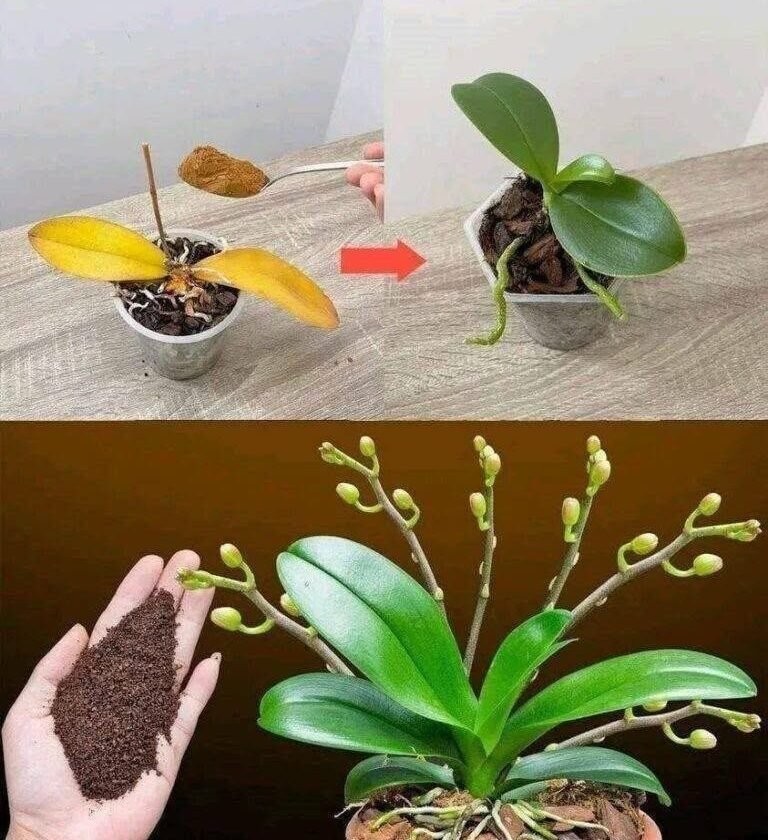
The idea of adding “just a teaspoon” of something to make an orchid suddenly explode with flowers sounds tempting—but orchids don’t have a magic ingredient that guarantees instant blooming.
What can make a dramatic difference is getting several basic conditions right at the same time. The American Orchid Society emphasizes that successful flowering depends on a balance of light, water, temperature, humidity, air movement, and nutrition.
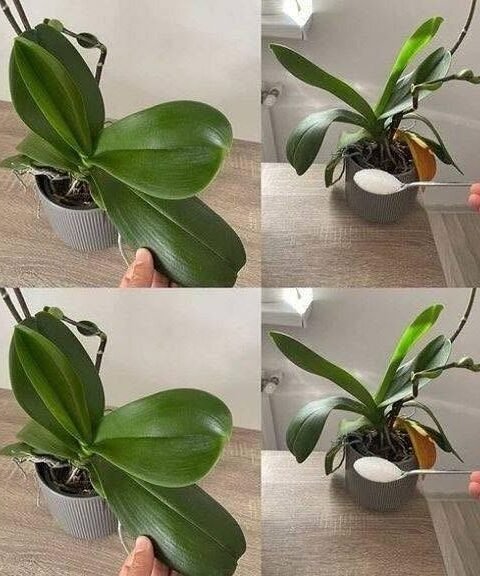
🌸 The “teaspoon” secret
If you’re using a commercial orchid fertilizer, a teaspoon can be an appropriate measurement only if the product’s label calls for that amount and it is diluted correctly. The exact amount depends on the fertilizer concentration.
In fact, orchid specialists generally recommend feeding weakly rather than heavily. The American Orchid Society advises using diluted fertilizer and notes that excessive fertilizer can cause salt buildup and root damage.
So don’t simply pour a teaspoon of concentrated fertilizer directly onto the roots.
☀️ Light is often more important than fertilizer
One of the most common reasons an otherwise healthy orchid refuses to bloom is insufficient light. If the plant has very dark green leaves and produces leaves but no flowers, it may not be receiving enough light.
For many common indoor orchids, a bright location near an appropriate window works well, while harsh midday sun may need to be filtered.
💧 Water correctly
Overwatering is another major problem. Orchids need moisture, but their roots also need air. If the growing medium stays constantly wet, roots can deteriorate and the plant may become too weak to flower.
Water thoroughly when appropriate for your orchid and growing medium, then allow excess water to drain away.
🌡️ Give the orchid its flowering cue
For many Phalaenopsis orchids, a change in nighttime temperature can help trigger flowering. Seasonal changes in day length and temperature are important blooming cues for different orchid genera.
That means moving a healthy orchid into a slightly cooler nighttime environment can sometimes do more for flowering than adding extra fertilizer.
🌱 If you want to try fertilizer
A sensible approach is:
- Use a fertilizer specifically formulated for orchids.
- Follow the manufacturer’s dilution instructions.
- Apply it to a properly hydrated plant rather than concentrated fertilizer onto dry roots.
- Don’t increase the concentration simply because you want more flowers.
- Periodically flush the growing medium with plain water to help prevent mineral-salt buildup.