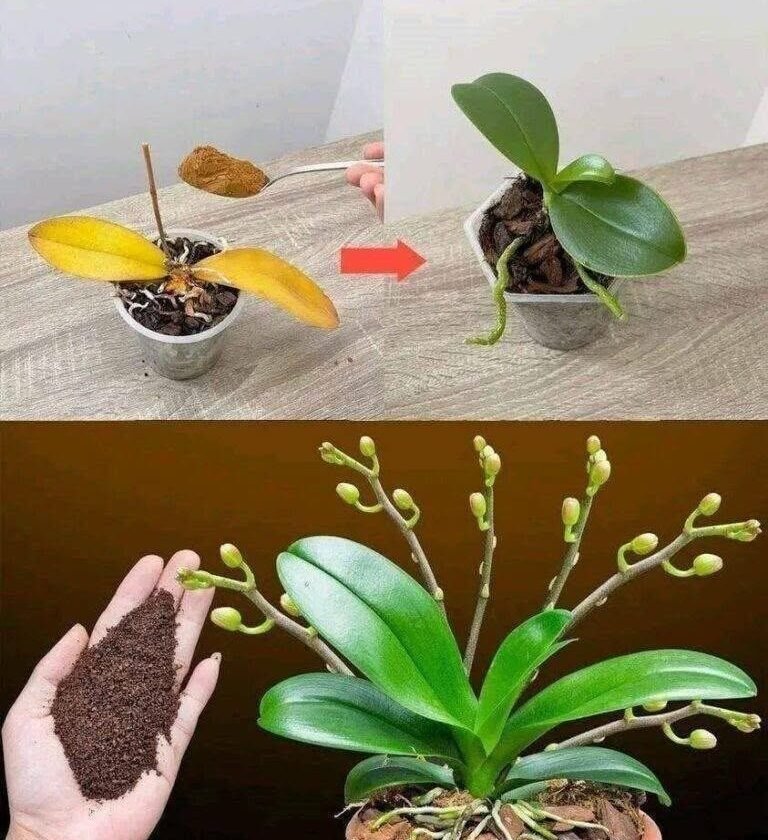
🌸 “Just 1 Teaspoon and Your Orchid Suddenly Blooms!” — What Actually Works
Be careful with viral recipes claiming that one teaspoon of a kitchen ingredient will make an orchid suddenly produce lots of flowers. Orchids don’t have a magic blooming ingredient.
For most orchids, especially Phalaenopsis, flowering depends much more on adequate light, appropriate watering, temperature, healthy roots, and proper nutrition. The American Orchid Society notes that insufficient light is one of the most common reasons orchids fail to rebloom. (American Orchid Society)
🌱 If you want to use fertilizer
Use a complete orchid fertilizer, not an unidentified kitchen ingredient.
- Dilute it according to the product directions; many experienced growers use less than the label’s maximum strength. (American Orchid Society)
- Fertilize only when the orchid is actively growing.
- Water the plant first, then apply diluted fertilizer to help reduce the risk of root damage. (American Orchid Society)
- Periodically flush the pot with plain water to reduce fertilizer-salt buildup. (American Orchid Society)
☀️ The bigger “bloom booster”
Give your orchid bright, indirect light, good air movement, and a well-draining orchid medium. Fertilizer is helpful, but the American Orchid Society emphasizes that fertilizer is only one part of successful orchid culture. (American Orchid Society)
Don’t pour sugar, milk, vinegar, baking soda, or other homemade mixtures into the pot. They aren’t established orchid fertilizers and may damage roots or encourage unwanted microbial growth.
Bottom line: There is no proven one-teaspoon miracle. For reliable reblooming, focus first on light + proper watering + healthy roots + dilute, appropriate fertilizer. 🌿🌸