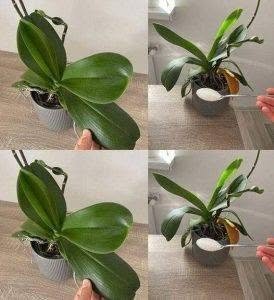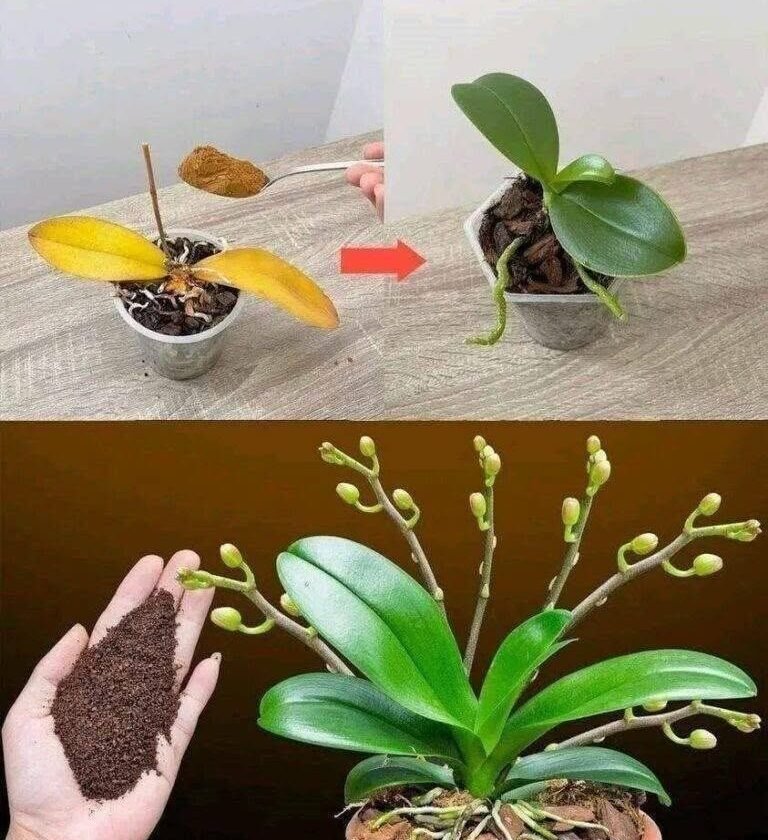
What Those Viral “1 Teaspoon” Pantry Hacks Actually Do (And Risk)
-
Rice Water or Banana Peel Water:
-
The claim: Supplies instant potassium and phosphorus to force massive flower spikes.
-
The reality: Diluted starch water contains trace minerals in forms roots barely absorb until soil microbes break them down—which does not happen efficiently in inert bark potting mix. Worse, leftover starch and sugar feed mold, fungus gnats, and root-rotting bacteria.
-
-
Epsom Salt (Magnesium Sulfate):
-
The claim: “One teaspoon gives orchids all the energy needed to explode with blooms.”
-
The reality: Orchids need tiny trace amounts of magnesium, which balanced orchid fertilizers already include. Dumping raw Epsom salt into bark media builds up mineral salt deposits that burn delicate orchid roots.
-
-
Coffee Grounds, Tea, or Milk:
-
The claim: “Boosts nitrogen and calcium for rapid flower buds.”
-
The reality: Fine coffee grounds compact around roots and suffocate airflow, milk sours into foul-smelling bacterial slime, and neither forces an orchid to bloom.
-
-
Cinnamon Powder:
-
The claim: “Sprinkle a teaspoon on roots or leaves to trigger blooms.”
-
The reality: Cinnamon is a mild natural desiccant and antifungal useful only for dabbing onto a fresh cut leaf or stem wound to seal it—putting it on healthy roots dries them out and blocks water absorption.
-
What Actually Makes a Phalaenopsis (Moth) Orchid Rebloom
-
Give It Bright, Indirect Light: Low light is the #1 reason healthy orchids grow leaves without flowers. Place it near an east-facing window or a bright south/west window filtered through a sheer curtain (leaves should be medium grassy green—very dark green leaves usually mean too little light).
-
Trigger a Gentle Nighttime Temperature Drop: Most common supermarket orchids (Phalaenopsis) initiate flower spikes in autumn/winter after 2 to 3 weeks of cooler nights around 13–16°C (55–60°F) paired with warmer daytime temperatures around 21–24°C (70–75°F).
-
Water Only When Roots Turn Silvery-Gray: Orchids grow on tree bark in nature and suffocate in soggy potting soil. Water thoroughly only when the potting bark dries out and the roots inside the clear pot look silvery-gray rather than plump and bright green, draining all excess water completely.
-
Use a Weak, Balanced Orchid Fertilizer (“Weakly, Weekly”): Feed with a water-soluble balanced orchid fertilizer (such as 20-20-20 or urea-free orchid formula) diluted to 1/4 strength every 2–3 waterings during active leaf and root growth, flushing with plain water once a month to prevent salt buildup.